
How to Get a Data Science Certificate Online in 2025: The ROI-Focused Career Roadmap
The U.S. Bureau of Labor Statistics projects a massive 33.5% growth in data science jobs by 2034. It is, without a doubt, one of the most promising career paths of the decade. But here is the problem I see aspirants face every day: “Analysis Paralysis.”
With hundreds of online certificates available—from Google’s popular crash courses to rigorous programs from Harvard—which one actually lands you the interview? And more importantly, can a $49/month subscription really replace a traditional degree?
In this guide, we are cutting through the marketing noise. I’m not just going to list courses; I’m going to walk you through a “Portfolio-First” strategy. We will analyze the Return on Investment (ROI) using late-2024 and 2025 market data, compare the top providers, and reveal the exact path from “enrollment” to “employed.”
According to the U.S. Bureau of Labor Statistics (BLS), employment of data scientists is projected to grow 34 percent from 2024 to 2034, much faster than the average for all occupations. The demand is real, but the bar for entry is rising.
Is a Data Science Certificate Worth It in 2025? (The ROI Analysis)
Before you commit 6 to 12 months of your life to studying, you need to know the numbers. Is this an investment or just an expense? Let’s look at the “Skills-First” hiring shift.
The “Skills-First” Hiring Shift
The days when a Master’s degree was the only gatekeeper to the data industry are fading. Companies are desperate for practical skills. According to a Coursera Learner Outcomes Report, 87% of learners pursuing professional certificates reported career benefits, including promotions, raises, or new job opportunities. Even more telling is the finding from the World Economic Forum, which notes that learners without degrees often take roughly the same amount of time to acquire key skills as those with degrees.
Salary Expectations: Certified vs. Non-Certified
Financial motivation is key. According to Glassdoor’s Salary Insights, the average base pay for a Data Scientist in the United States is approximately $164,818 per year as of late 2024/early 2025 data. Even entry-level positions often start above six figures.
However, the real value lies in the cost-benefit analysis. A traditional master’s degree can cost $30,000 to $60,000. Compare that to the Coursera pricing for a Google or IBM certificate, which costs approximately $49 per month. If you complete the certificate in 6 months, your total cost is under $300.
💰 ROI Calculator (Example)
Traditional Degree: Cost: $40,000 | Time: 2 Years | Opportunity Cost: High
Online Certificate: Cost: ~$300 | Time: 6 Months | Opportunity Cost: Low
If the certificate helps you land a $112,590 median salary job (Source: BLS May 2024 Data), the ROI is astronomically higher for the self-taught route, provided you can prove your skills.
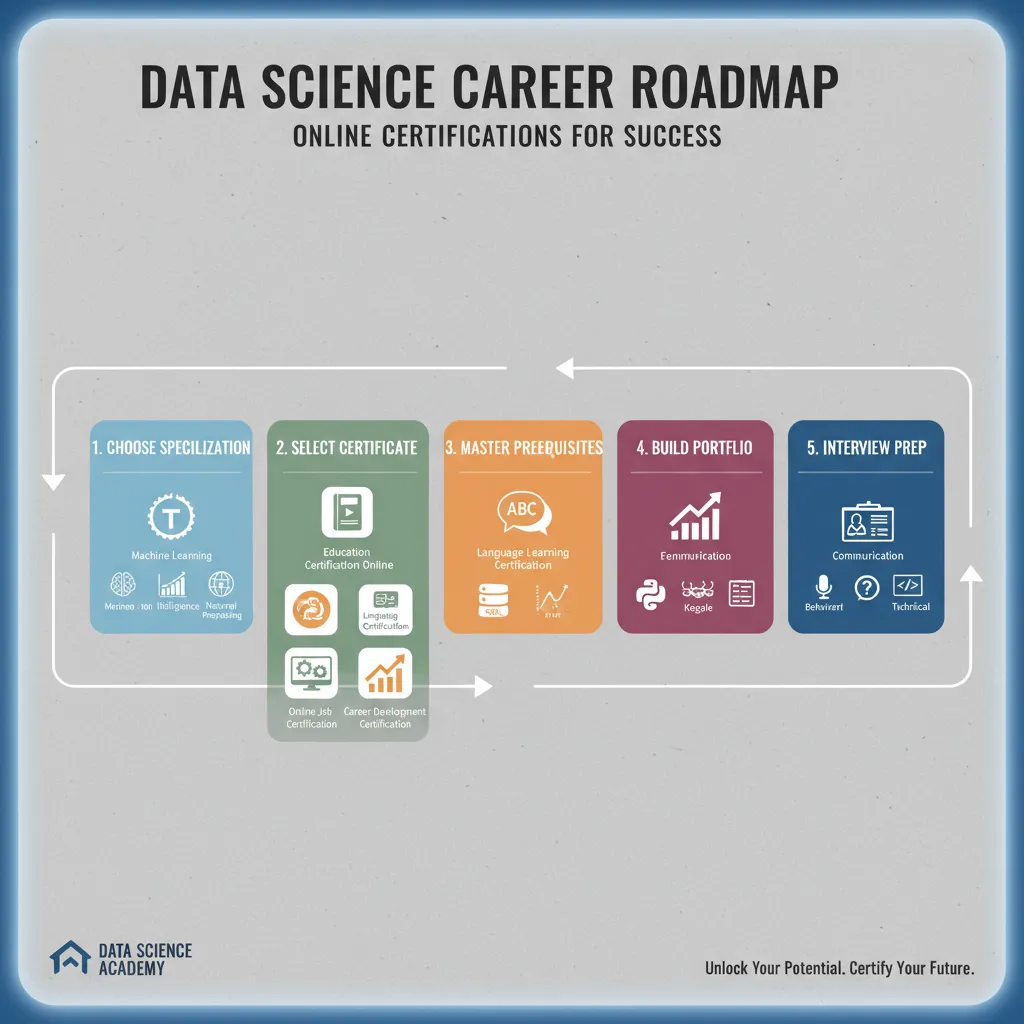
Step 1: Choose Your Specialization (Don’t Generalize)
One of the biggest mistakes I see beginners make is trying to learn “everything.” Data Science is a massive umbrella. To get certified effectively, you need to pick a lane.
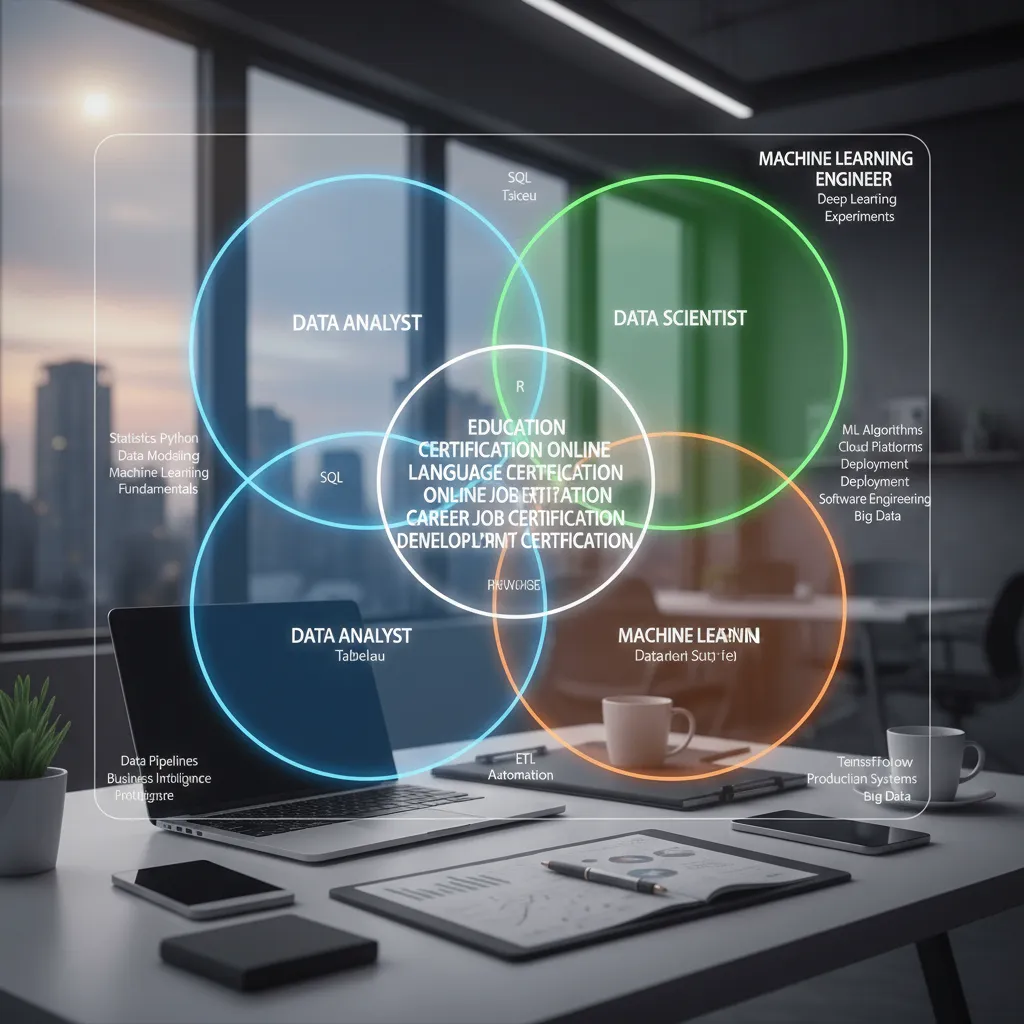
- Data Analyst: Focuses on describing what happened. You need Excel, SQL, and Tableau/Power BI skills. (Best for: Google Data Analytics Certificate).
- Data Scientist: Focuses on predicting what will happen. You need Python, Statistics, and Machine Learning. (Best for: IBM Data Science Professional Certificate).
- Machine Learning Engineer: Focuses on deploying models. You need heavy coding skills and software engineering principles.
Step 2: Top Data Science Certification Providers Compared (2025 Pricing)
Not all certificates are created equal. Recruiters recognize some names more than others. Here is the breakdown of the “Big Three” options available today.
The “Big Three” Ecosystems: Google, IBM, and Microsoft
These are industry-recognized because they teach you the tools used in actual corporate environments.
1. Google Data Analytics Certificate:
This is the gold standard for absolute beginners. It focuses heavily on the R programming language and Google Sheets. According to Coursera, the program connects you with an employer consortium of over 150 companies, including Deloitte and Verizon. It costs roughly $49/month.
2. IBM Data Science Professional Certificate:
If you want to be a true Data Scientist, this is often the better choice over Google. Why? Because it teaches Python, which dominates the industry. Data from the JetBrains/Python Software Foundation 2023 Survey indicates that Python usage for data analysis remains dominant, with 44-51% of developers using it for data exploration.
University-Backed Options: Harvard (edX) & Johns Hopkins
If you care about prestige or are looking to impress a more traditional employer, university certificates are powerful. The Professional Certificate in Data Science by Harvard University (edX) is rigorous. It doesn’t use a subscription model; instead, the edX program costs approximately $792, though this varies by promotion.
| Provider | Best For | Est. Cost | Primary Tool |
|---|---|---|---|
| Beginner Analysts | $49/mo (Coursera) | R & Sheets | |
| IBM | Aspiring Scientists | $49/mo (Coursera) | Python & SQL |
| Harvard (edX) | Academic Rigor | ~$792 (One-time) | R |
| DataCamp | Skill Drills | $25/mo (Subscription) | Python/R |
Andrew Ng, Founder of DeepLearning.AI
“I disagree with the… winner who wrote, ‘It is far more likely that the programming occupation will become extinct.’ As coding becomes easier, more people should code, not fewer!”
— Source: Andrew Ng’s The Batch, March 2025
Step 3: Mastering the Prerequisites (The Hidden Hurdles)
Certificates are structured, but they often gloss over the basics. If you jump into Machine Learning without understanding linear algebra or basic statistics, you will hit a wall. In my experience, you need to supplement your certificate with these core skills:
1. Python (The King of Data):
As mentioned earlier, Python is the industry standard. Focus specifically on libraries like Pandas and NumPy. Don’t worry about building games; focus on data manipulation.
2. SQL (The Language of Databases):
You cannot be a data scientist if you cannot get the data out of the database. SQL is non-negotiable.
3. Refresher Math:
You don’t need to be a mathematician, but you do need to understand probability distributions and hypothesis testing. Without this, you won’t know if your data insights are statistically significant or just random noise.
Step 4: Building a “Hirable” Portfolio (The Competitor Gap)
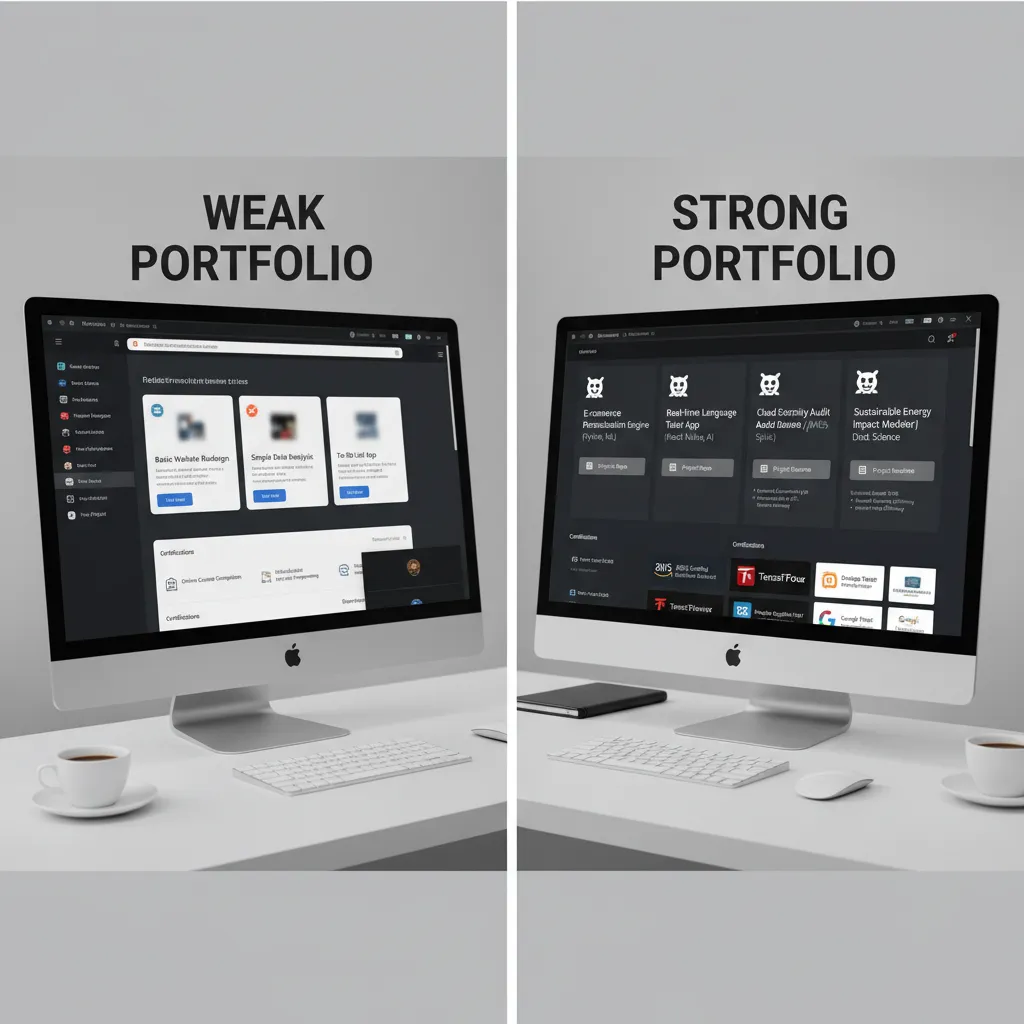
Here is the secret that most “How to” guides won’t tell you: The certificate gets you past the ATS (Applicant Tracking System), but the portfolio gets you the job.
Why the Certificate is Only 50% of the Equation
Recruiters see thousands of “Google Certified” candidates. To stand out, you need to apply what you’ve learned. You need to show that you can handle dirty, messy, real-world data.
3 Capstone Project Ideas That Impress Recruiters
Please, I beg you, do not use the “Titanic Survival” dataset. Everyone uses it. Try these instead:
- The “Dirty Data” Project: Kaggle analysis suggests that data scientists spend about 90% of their time cleaning dirty data. Scrape data from a website (like real estate listings or weather data), clean it, and present your cleaning code. This shows you can handle the grunt work.
- Business Impact Analysis: Take a dataset (e.g., retail sales) and don’t just predict sales. calculate the potential revenue increase if your model is applied. Speak the language of business.
- IoT Data Stream: According to a DASCA Future of Data Science Report, by 2025 there will be over 27.1 billion IoT devices worldwide. Building a project that analyzes streaming data from a wearable device or sensor puts you ahead of the curve.
Cassie Kozyrkov, Former Chief Decision Scientist at Google
“Real success has to start with designing our own lives instead of copying the lives of others… taking the time to understand oneself well enough to design personally-fulfilling goals.”
— Source: Domino Data Lab / Medium Blog, late 2024
Step 5: Preparing for the Technical Interview
Once your portfolio lands you an interview, the game changes. You will likely face a technical screening.
The Coding Challenge: Platforms like LeetCode and HackerRank are standard. You should be comfortable solving “Medium” difficulty SQL and Python problems. While new AI tools increase productivity—a Google internal report cited by Financial Express (Aug 2025) noted a 10% productivity spike with AI tools—you still need to understand the underlying logic to debug when the AI gets it wrong.
Soft Skills: The World Economic Forum’s Future of Jobs Report highlights that “analytical thinking and creative thinking” remain the most important skills for workers through 2027. You must be able to explain complex data findings to non-technical stakeholders.
FAQ: Common Questions About Online Data Science Certificates
Is the Google Data Analytics Certificate enough to get a job in 2025?
On its own? Likely not. It qualifies you for entry-level analyst roles, but the competition is stiff. You must pair it with a strong portfolio and perhaps more advanced Python training to stand out.
How long does it take to become a data scientist online?
Most students can complete a professional certificate in 3 to 6 months if they study 10 hours a week. However, becoming “job-ready”—which includes building a portfolio and prepping for interviews—usually takes 9 to 12 months.
Do I need a degree for data science in 2025?
Not strictly. While a degree helps, the Coursera/WEF research shows that skills-based hiring is accelerating. If you have a degree in an unrelated field (like Physics or Economics) and add a Data Science certificate, you are a very strong candidate.
Conclusion: Your 4-Week Roadmap
Getting a data science certificate online is a strategic move in 2025, provided you treat it as the start of your journey, not the end. The demand is there—remember that 34% growth projection from the BLS.
Here is your plan to start today:
- Week 1: Enroll in the Google (for analysts) or IBM (for scientists) certificate on Coursera.
- Week 2: Commit to 1 hour of study every single day. Consistency beats intensity.
- Week 3: Start a GitHub repository. Upload your first coursework assignment.
- Week 4: Identify a unique dataset for your future capstone project.
The tools are affordable, and the path is clear. The only variable left is your persistence.