

Best Career Coaching Certifications for Work: 2025 Rankings & ROI Guide
The coaching industry isn’t just growing; it’s exploding. According to IBISWorld’s 2024 report, the US career coaching and job training market reached a staggering $16.9 billion this year. But if you are looking to enter this field, you are likely facing a “Wild West” of options ranging from $50 weekend courses to $20,000 university diplomas.
I’ve reviewed hundreds of programs over the years, and here is the hard truth: not all certificates get you hired.
Whether you are an HR leader looking to internalize coaching for your organization or a professional pivoting to private practice, the credential you choose dictates your earning potential. In this definitive guide, we move beyond generic “life coaching” lists to focus specifically on the best career coaching certifications for work—the ones that carry weight in the corporate world and offer a tangible Return on Investment (ROI).

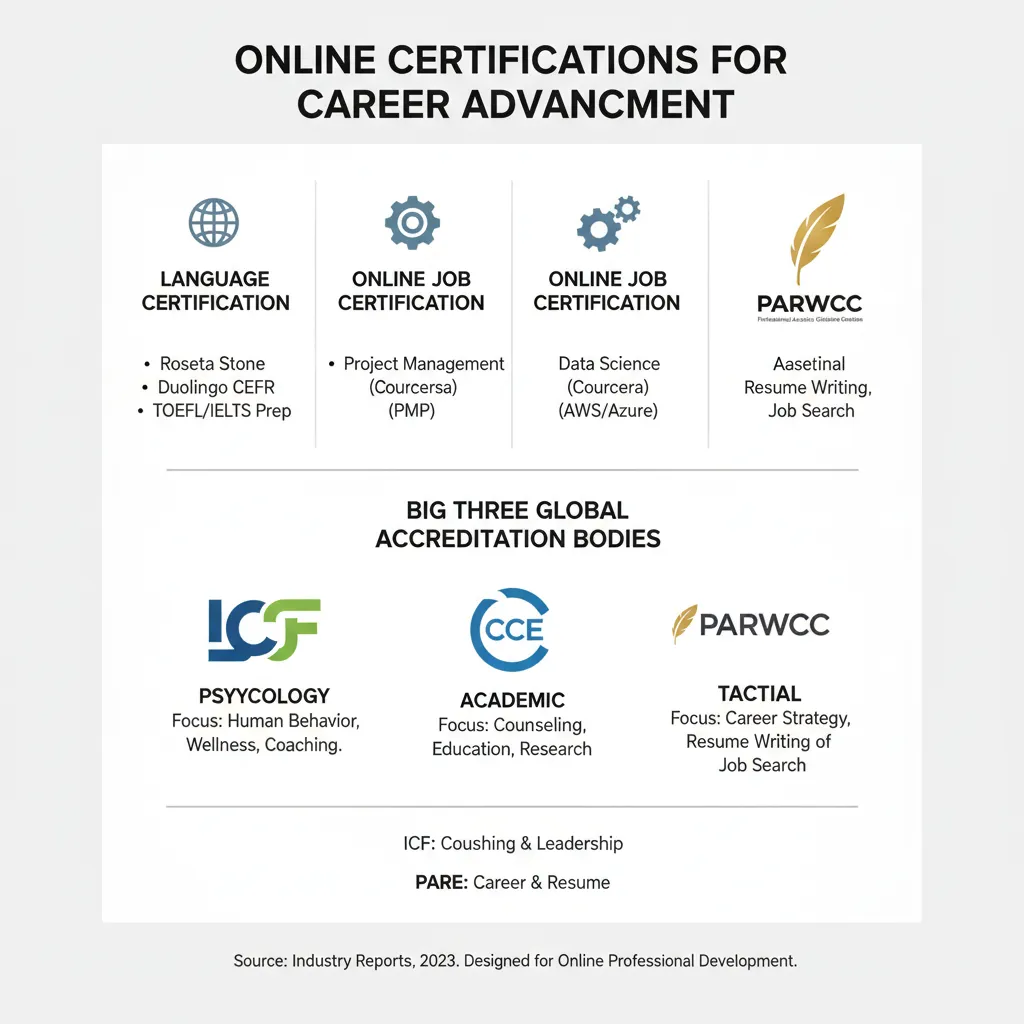
The “Big Three” Accreditation Bodies (Don’t Skip This)
If you take nothing else from this article, remember this: Accreditation is your only defense against low-quality programs. As Magda Mook, CEO of the International Coaching Federation (ICF), noted in a Forbes interview, “Credibility is the currency of coaching. In an unregulated industry, certification is the only way to signal trust to a client.”
When selecting a program, you must ensure it aligns with one of these three governing bodies:
1. International Coaching Federation (ICF) — The Gold Standard
The ICF is the most globally recognized body. They don’t provide the training themselves; they accredit schools that meet their rigorous Core Competencies. An ICF-accredited program is essential if you want to work with Fortune 500 companies.
2. Center for Credentialing & Education (CCE) — The Academic Standard
The CCE administers the Board Certified Coach (BCC) credential. Unlike the ICF, the BCC usually requires you to hold a Bachelor’s or Master’s degree in a related field (counseling, psychology). It is highly respected in academic and medical settings.
3. Professional Association of Resume Writers & Career Coaches (PARWCC) — The Tactical Standard
While ICF focuses on the psychology of coaching, PARWCC focuses on the tactics: resume writing, job search strategies, and personal branding. This is often the best starting point for tangible “career” coaching.
Top Career Coaching Certifications for 2025 (Ranked)
Based on curriculum depth, market reputation, and 2025 pricing data, here are the top programs segmented by career intent.
1. Certified Professional Career Coach (PARWCC)
If your goal is to help clients get jobs immediately—through resume rewrites, interview prep, and job search strategy—this is the industry favorite. The PARWCC program is less about “mindset” and more about the practical tools needed to navigate the labor market.
- Format: Self-paced, online study with a final exam.
- Focus: Career transition, resume mechanics, labor market trends.
- Why it wins: It offers the fastest path to ROI for independent business owners.
Cost: ~$1,500
2. NACE Coaching Certification Program (CCP)
The National Association of Colleges and Employers (NACE) is the authority on university career services. Their Coaching Certification Program is designed specifically for professionals working in higher education or early-career recruiting.
- Format: Virtual workshops and interactive modules.
- Focus: Student development, ethics, and early-career advising.
- Why it wins: If you work in Higher Ed, this is the credential your boss recognizes.
Cost: ~$1,200 (Members) / ~$1,500 (Non-members)
3. iPEC (Institute for Professional Excellence in Coaching)
For those aiming for high-ticket executive coaching, iPEC is a heavyweight. It is an ICF-accredited program that teaches “Energy Leadership,” a proprietary methodology popular in corporate boardrooms. It is an intense investment but yields high returns.
- Format: Intensive live modules (virtual or in-person) + peer coaching.
- Focus: Executive leadership, mindset shifts, Energy Leadership Index (ELI).
- Why it wins: Graduates often charge the highest hourly rates in the industry.
Cost: ~$12,000 – $13,995
4. Columbia University Coaching Certification (ECP)
When you need prestige, you go to the Ivy League. The Columbia Coaching Certification Program (3CP) combines rigorous academic research with practical application. It is heavily favored by large enterprises hiring internal coaches for their leadership teams.
- Format: Residential intensives in NYC or virtual options.
- Focus: Organizational psychology, leadership development.
- Why it wins: The “Columbia” name on a resume opens doors that other certificates cannot.
Cost: ~$22,000+
Comparative Analysis: Cost vs. Salary Potential
Is the certification worth the cost? Let’s look at the data. According to the ICF Global Consumer Awareness Study (2023), 80% of coaching clients expect their coach to be credentialed. This trust translates directly to income.
Furthermore, data from the Bureau of Labor Statistics (BLS) indicates that the median annual wage for educational and career counselors was $65,140 in May 2024, with the top 10% earning more than $105,870. However, private executive coaches operating with high-level credentials (like iPEC or Columbia) often exceed these figures significantly.
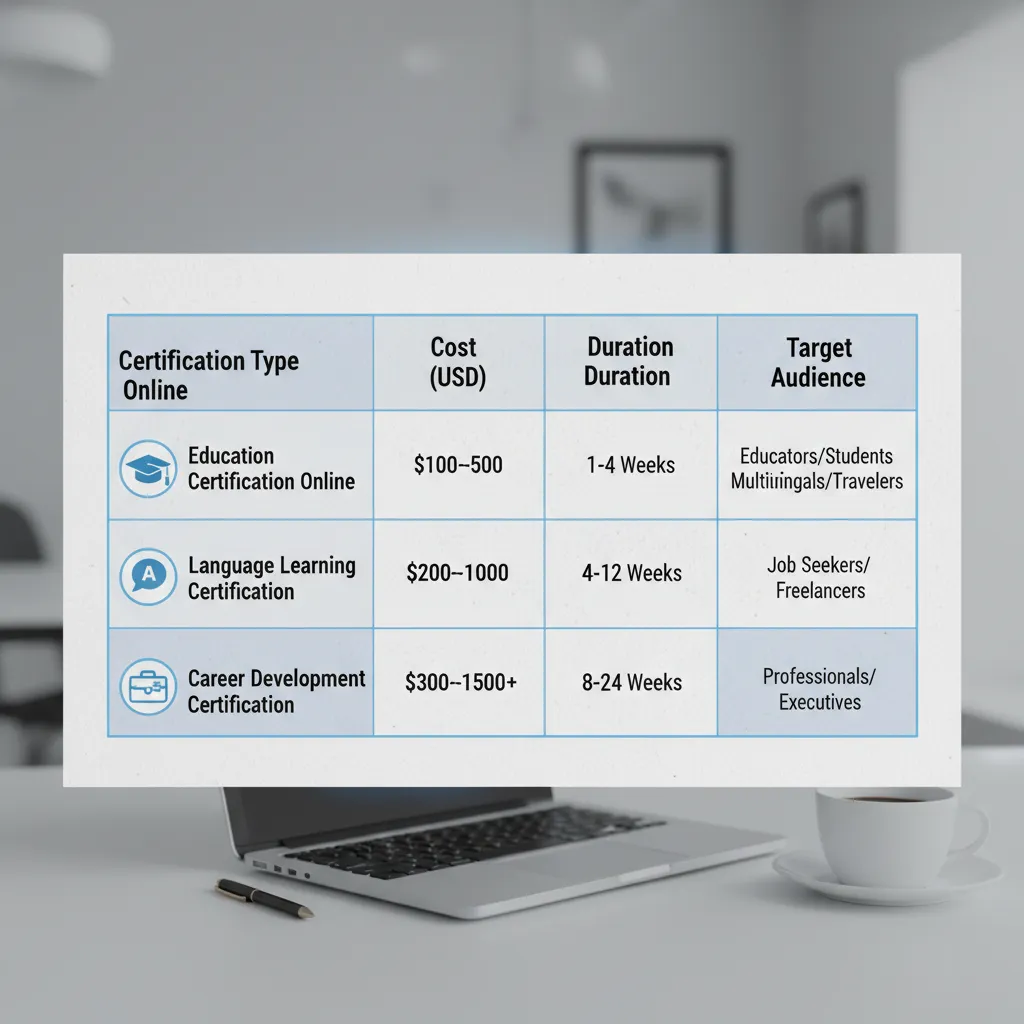
| Credential Type | Avg. Program Cost | Avg. Hourly Rate (Private) | Primary Value Prop |
|---|---|---|---|
| Tactical (PARWCC) | $1,500 | $75 – $150 | Volume (Resumes + Job Search) |
| Academic (NACE) | $1,200 | $30 – $60 (Salaried) | Stability in Higher Ed |
| Executive (ICF/iPEC) | $12,000+ | $250 – $500+ | High-Ticket Leadership Consulting |
| Internal (Masters/Uni) | $20,000+ | $90k – $140k (Salary) | Corporate Benefits & Security |
According to aggregated data from Thervo and Payscale in 2024, private career coaches typically charge between $75 and $200 per hour. However, once you cross the threshold into “Executive Coaching” with an ICF credential, those rates often double.
How to Choose the Right Certificate for Your Career
I have spoken to many aspiring coaches who make the mistake of buying the most expensive course, thinking it guarantees success. It doesn’t. You need to map the certification to your specific career outcome.
For HR & L&D Leaders (Internal Coaching)
If you are looking to become an “Internal Coach” or “Talent Development Manager,” corporate demand is on your side. A 2024 LinkedIn Learning Workplace Learning Report cited that 56% of organizations list coaching as a key L&D priority.
Recommendation: Prioritize programs like Columbia University or an ICF-Accredited program that focuses on organizational psychology. Companies want to know you can handle complex team dynamics, not just individual resume reviews.
For Private Practice Entrepreneurs
If you are starting a business, your overhead matters. You need a quick ROI. Spending $20,000 before you have a single client is risky.
Recommendation: Start with PARWCC (CPCC) to master the tactical side of getting people jobs. This allows you to generate revenue quickly. Once your cash flow is established, invest in an advanced ICF credential to raise your rates.

FAQ: Critical Questions Before You Enroll
Q: Is a career coaching certification actually worth it?
Yes, for two main reasons: liability and leverage. Corporate clients require it for liability reasons (they need to verify you are trained). For private practice, it provides leverage to charge more. As noted earlier, certified coaches can command rates 20-40% higher than non-certified peers.
Q: Can I be a career coach without a degree?
Yes. The coaching industry is self-regulated. You can open a private practice without a degree. However, if you want the Board Certified Coach (BCC) credential specifically, you generally need a Bachelor’s degree or higher. Most ICF programs do not require a degree, only the completion of their training hours.
Q: What is the difference between a career coach and a career counselor?
This is a critical distinction. Counselors often focus on mental health, behavioral testing, and past traumas that block career progress; they typically require a Master’s degree and state licensure (Source: BLS). Coaches focus on the future—strategy, action plans, and accountability. Coaching is unregulated; Counseling is regulated.
Q: How much does it cost to become a certified career coach?
The range is vast. You can find entry-level accredited courses (like NACE) for around $1,200, while comprehensive university-based executive programs can run upwards of $15,000 to $25,000.
Conclusion: Your Actionable Roadmap
The career coaching market is projected to grow 4% annually from 2024 to 2034, adding roughly 31,000 openings every year according to the BLS. The opportunity is there, but the barrier to entry is low, which means the competition is high.
To dominate in 2025, follow this roadmap:
- Define Your Lane: Are you tactical (resumes) or psychological (leadership)?
- Verify Accreditation: Look for the logos of ICF, CCE, or PARWCC.
- Calculate ROI: If you plan to charge $100/hour, a $12,000 course requires 120 billable hours just to break even. Ensure your business model supports your education costs.
Choosing the right certification isn’t just about the letters after your name; it’s about equipping yourself with the tools to genuinely transform careers. Choose wisely, and the investment will pay dividends for decades.