
Which Leadership Certifications Look Best on a Resume? (2025 ROI Guide)
Let’s be honest for a moment: your resume is likely sitting in a stack (or a digital queue) alongside hundreds of others. In my years reviewing executive and management portfolios, I’ve seen a disturbing trend. Candidates are cluttering their “Education” sections with what I call “participation trophies”—low-effort completion certificates that signal curiosity but not competence.
In 2025, the game has changed. According to the LinkedIn 2024 Workplace Learning Report, 9 out of 10 global executives plan to increase or maintain their Learning & Development (L&D) budgets, specifically looking for skills that align with business goals. They aren’t looking for generalists; they are looking for revenue-generating leaders.
So, which acronyms actually lead to a salary hike, and which are just resume filler?
We analyzed the top 15 credentials against 2024-2025 industry reports to determine the definitive list of leadership certifications that offer genuine ROI, prestige, and employability.
The “Resume Value” Matrix: How to Choose
Before we dive into the specific credentials, you need to understand how recruiters view these designations. Not all “certificates” are created equal. In my opinion, the biggest mistake professionals make is confusing a Certificate of Completion with a Professional Certification.
Certificate vs. Certification: The Critical Distinction
Think of it this way: A certificate of completion (like a standard Udemy or LinkedIn Learning course) is like watching a documentary on surgery. A professional certification (like the PMP) is like going to medical school.
- Certificate of Completion: Proof you attended a course. Low barrier to entry. Good for knowledge, low value for resume authority.
- Professional Certification: Proof of competence. Requires an exam, experience, and continuing education. High barrier to entry. High resume authority.
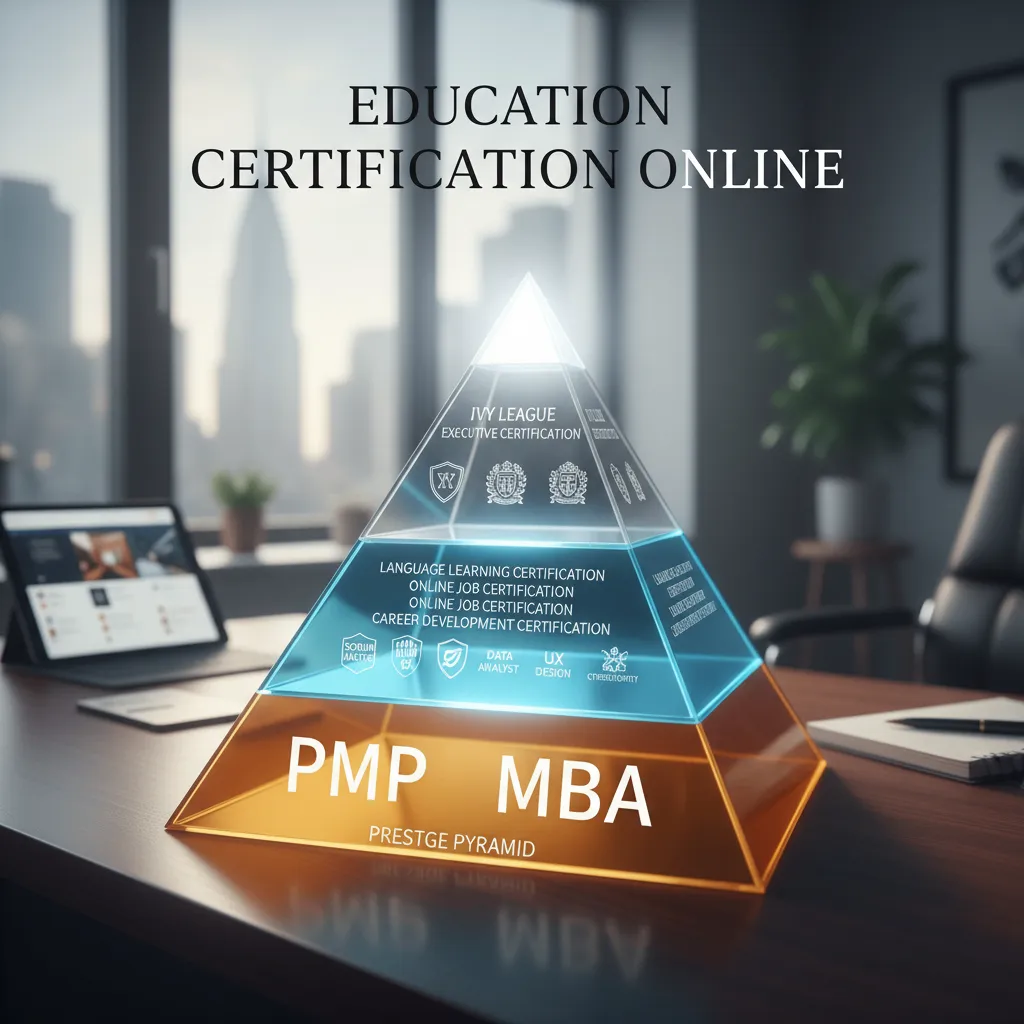
To dominate the resume pile, you need credentials that satisfy three pillars: Accrediting Authority, Rigor of Exam, and Industry Demand.
Tier 1: The “Gold Standard” Professional Designations (High ROI)
If you want immediate ROI and a justifiable reason to ask for a raise, start here. These aren’t just courses; they are professional identities.
1. Project Management Professional (PMP)®
You might be wondering, “Is PMP a leadership cert?” Absolutely. It is the de facto credential for operational leadership. It proves you can lead teams, manage budgets, and execute strategy.
2025 ROI IMPACT
33% Salary Increase
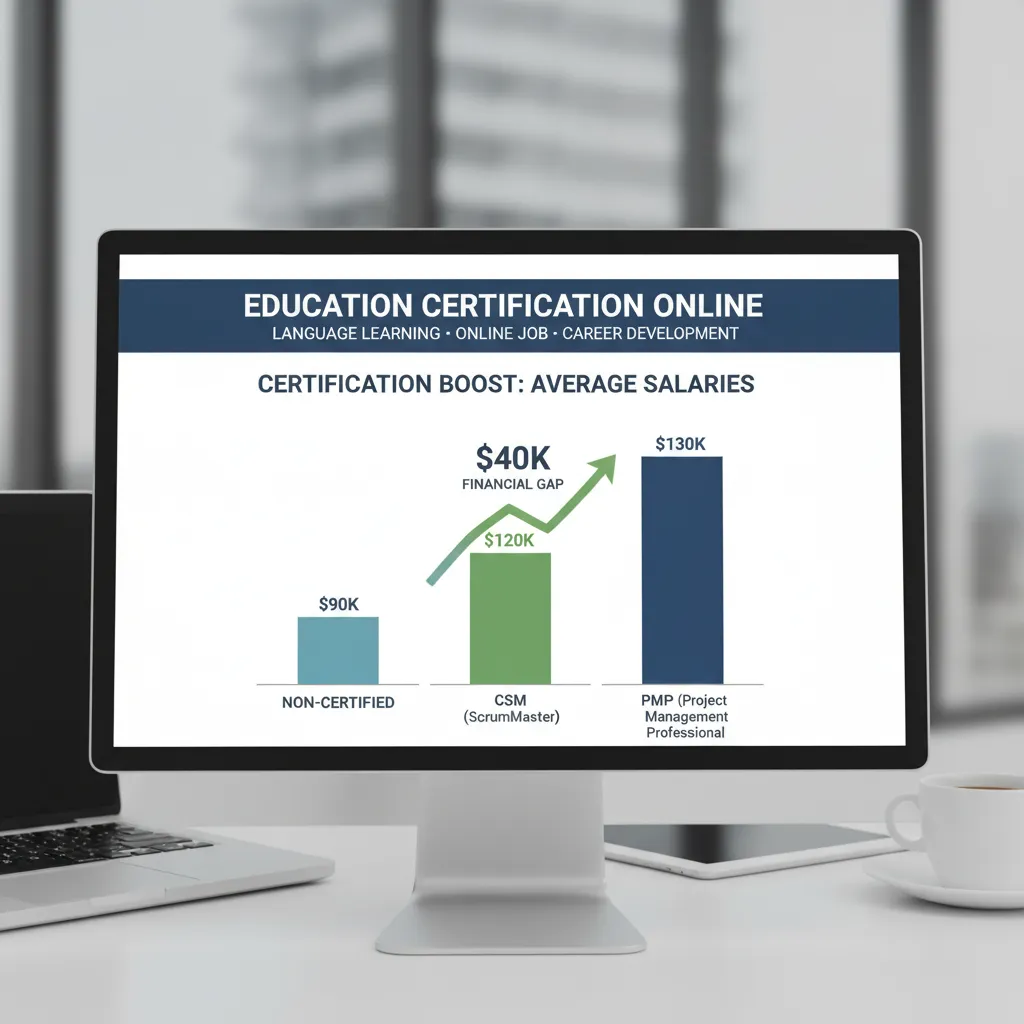
According to PMI’s Earning Power: Project Management Salary Survey (13th Edition) released in 2024, professionals with a PMP certification earn a median salary 33% higher than those without it globally, and 44% higher in the U.S. ($130,000 vs. $90,000). Source: PMI
Who it’s for: Mid-to-senior leaders who manage complex initiatives. It signals that you speak the universal language of business execution.
2. Certified ScrumMaster (CSM)®
Traditional command-and-control leadership is dying. Agile is the new operating system of business. Even if you aren’t in software development, the CSM designation tells employers you understand iterative leadership and servant-leadership principles.
Data from 2024 suggests that Certified ScrumMasters (CSM) command salaries over $120,000, with a premium of roughly 21% over non-certified peers, according to recent analysis from Payscale and Techademy. This is particularly vital as AI accelerates the need for rapid adaptation.
3. Certified Manager (CM)®
While less famous than the PMP, the Certified Manager credential from the Institute of Certified Professional Managers (ICPM) is a strong signal for generalist leaders. It covers the essentials: planning, organizing, leading, and controlling.
Tier 2: Elite University Executive Certificates (High Prestige)
If Tier 1 is about utility, Tier 2 is about brand association. Having “Harvard” or “Wharton” on your resume triggers a psychological “halo effect” for recruiters. However, these programs are expensive. Are they worth it?
In my experience, yes—but primarily for the network and the signal of “elite” training, rather than pure technical ROI.
Harvard Business School Online: Certificate of Leadership Excellence
This is the heavy hitter. It typically requires completing multiple modules (like Strategy, Negotiation, and Leadership). It’s rigorous and expensive, but it places the HBS brand on your LinkedIn profile. For executives targeting the C-Suite, this signals you’ve been vetted by the best.
Cornell University: Executive Leadership Certificate
Cornell’s eCornell platform has mastered the online executive niche. Their programs are facilitated by instructors, meaning you get actual human feedback. This certificate is particularly respected in corporate HR and Operations circles because of Cornell’s legacy in industrial labor relations.
Wharton Online: Leadership and Management Certificate
Wharton (UPenn) is synonymous with finance and hard strategy. A leadership certificate here implies you are a leader who understands the bottom line. It pairs exceptionally well with a PMP if you want to bridge the gap between “getting things done” and “strategic vision.”
Tier 3: Specialized & Niche Leadership Certs
Sometimes, the “best” certification is the one that solves a very specific problem for your employer.
SHRM-Senior Certified Professional (SHRM-SCP)
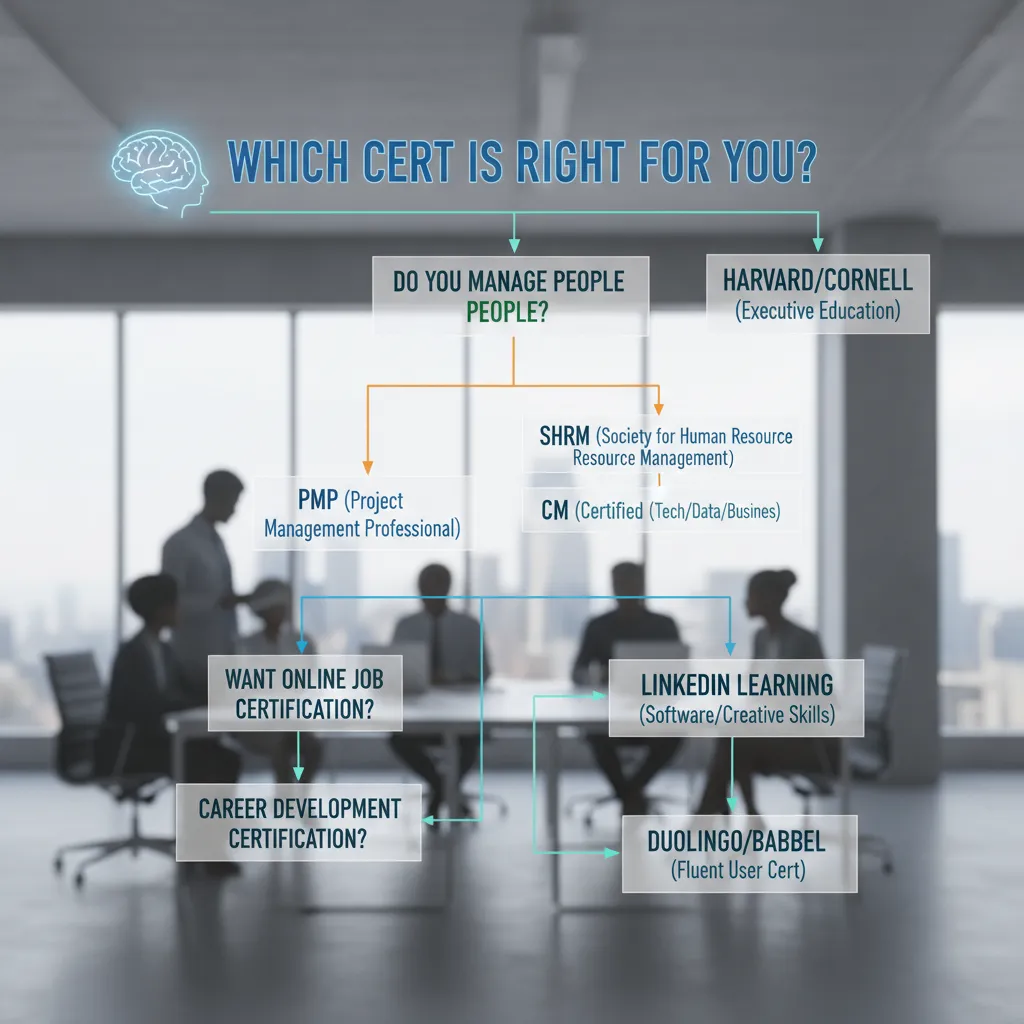
If your leadership role involves heavy people management, talent strategy, or organizational design, the SHRM-SCP is the gold standard. It moves beyond basic HR tasks into strategic leadership.
Prosci Change Management Certification
This is the sleeper hit of 2025. With AI disrupting workflows, companies are desperate for leaders who can manage change.
According to the LinkedIn 2024 Workplace Learning Report, “aligning learning to business goals” is the #1 priority for executives. Leaders who are certified in change management (Prosci) are the ones trusted to navigate digital transformation.
2025 Salary Impact & ROI Analysis
Let’s look at the numbers. While tuition for these programs can range from $500 to $15,000, the salary uplift often pays for the investment within the first year.
| Certification | Est. Cost | Avg. Salary Premium | Best For… |
|---|---|---|---|
| PMP® | $400 – $600 (Exam) | +33% (Global) | Operational Leaders |
| CSM® | $1,000 (Training) | +21% | Tech/Agile Leaders |
| HBS Online | $2,500+ | Variable (High Prestige) | Executive Presence |
| SHRM-SCP | $400 – $500 | +15% (HR Roles) | People Managers |
The “AI” Factor in 2025
There is a new variable in the equation. 4 in 5 people want to learn how to use AI in their profession according to LinkedIn’s 2024 data. If you are pursuing a leadership certificate in 2025, look for programs that have integrated “Digital Transformation” or “AI Strategy” modules. A standard leadership course that ignores AI is already outdated.
FAQ: Common Questions About Leadership Credentials
Can I list a Coursera course as a certification?
You can, but be careful where you place it. If it is a “Specialization” from a top university (like the University of Michigan via Coursera), list it under “Professional Development.” Do not list a 4-hour video course under “Certifications” alongside a PMP. It dilutes your brand.
Do I need an MBA or is a leadership certificate enough?
This is the classic debate. An MBA is a long-term strategic asset that takes 2 years and $50k+. A leadership certificate is a tactical asset that takes 3 months and $3k. If you need a quick pivot or a resume boost now, the certificate is the better ROI. If you are aiming for CEO of a Fortune 500, the MBA is likely still required.
Is the “Certificate of Completion” from LinkedIn Learning worth anything?
I view these as “conversation starters” rather than “job getters.” They show you are proactive. However, they rarely carry weight in salary negotiations because there is no barrier to entry—anyone can click “play” on a video.
Conclusion: The Verdict for Your Resume
So, which leadership cert looks best on a resume? It depends entirely on the gap you are trying to fill.
If your resume screams “technical expert” and you want to prove you can manage a budget, get the PMP. It is statistically the highest ROI credential you can get without a master’s degree.
If your resume feels “light” on prestige or you went to a lesser-known university, an executive certificate from Harvard, Wharton, or Cornell can act as a powerful counterweight, signaling that you belong in elite circles.
The days of resting on your tenure are over. As the LinkedIn 2024 report emphasizes, the future belongs to those who align their learning with business goals. Choose a certification that doesn’t just hang on your wall, but actively works to lift your salary.