
Top Leadership Training for Career Growth: The 2025 Guide to ROI & Rankings
We need to talk about the elephant in the boardroom. You were probably promoted because you were excellent at your job—the best coder, the top salesperson, or the most efficient marketer. But here is the harsh reality that most HR departments whisper but rarely shout: being great at doing the work has almost nothing to do with being great at leading people who do the work.
The statistics are alarming. According to Gartner’s 2024 HR Priorities Report, 60% of new managers fail within the first 24 months due to a lack of training. That’s more than half. I’ve seen this firsthand in my consulting work—brilliant professionals drowning in administrative chaos and team conflict simply because they were handed the keys to the car without ever being taught how to drive.
But there is good news. Leadership is not a genetic trait; it is a learned discipline. In 2025, the landscape of professional development has shifted from generic “management seminars” to high-ROI, specialized training that covers everything from AI fluency to empathetic leadership.
In this guide, we are not just listing courses. We are analyzing the top globally recognized programs based on verified 2025 data, examining the financial payoff of these certifications, and providing a roadmap for both new managers and seasoned executives. Whether you are looking to secure a promotion or simply survive your first year of management, this is your definitive resource.

Why Leadership Training is the #1 Career Accelerator (2025 Data)
Many professionals view leadership training as a “nice-to-have” add-on, something to do when the workload lightens. In my experience, waiting for a light workload is a strategy for stagnation. The data proves that investing in leadership skills is the single most effective lever for career velocity and salary growth.
The “Broken Rung” and the Trust Crisis
The transition from individual contributor to manager is often called the “broken rung” on the corporate ladder. It’s where career progress stalls for women and minorities in particular, but it affects everyone. The cost of this failure is high, not just for you, but for your team.
According to DDI’s 2023/24 Global Leadership Forecast, only 32% of employees trust senior leaders in their organization. This is a crisis of confidence. When you undergo formal leadership training, you aren’t just learning how to organize a spreadsheet; you are learning the psychology of trust.
The Financial Payoff: ROI is Real
If you need to justify the cost of these programs to yourself or your employer, look at the bottom line. Companies are desperate for trained leaders because they drive profit.
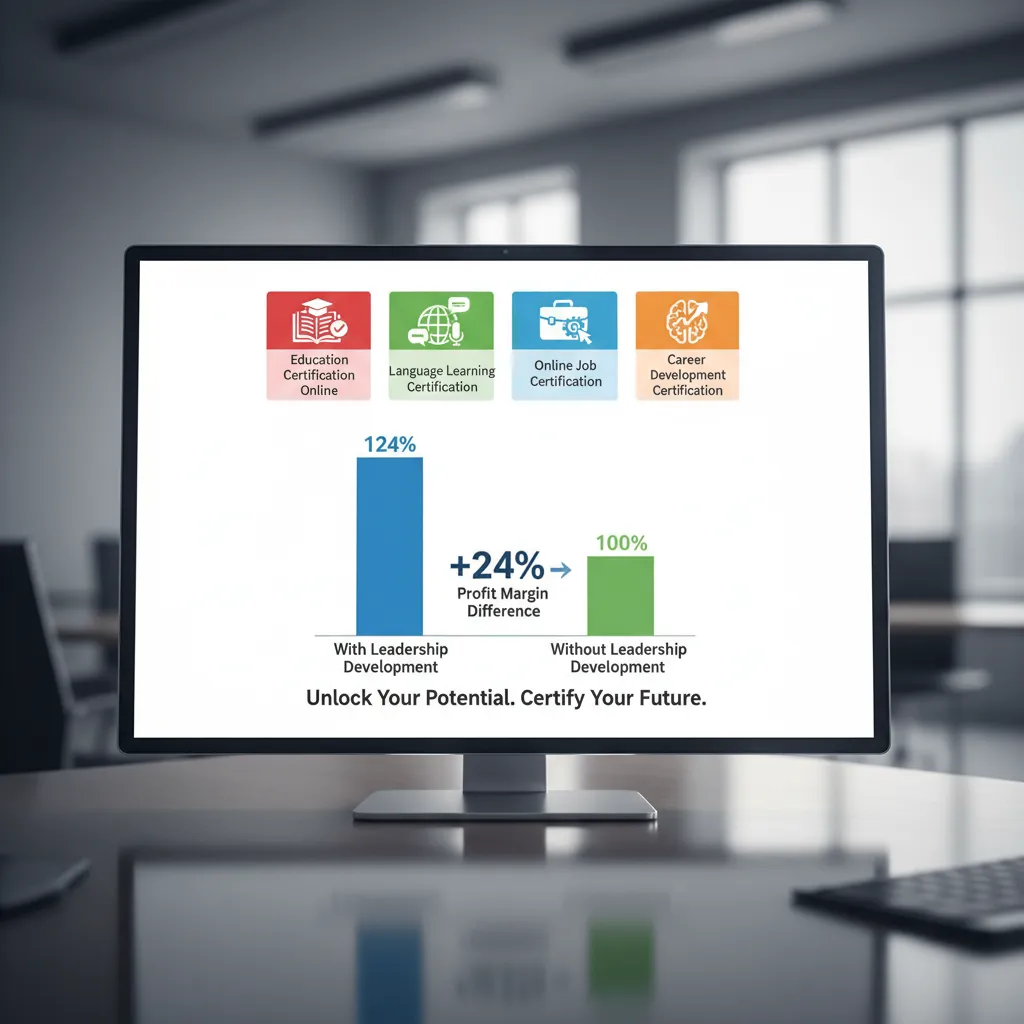
Key Stat: The Profit Margin Boost
According to data from the Aberdeen Group via Training Industry Report (2024), companies that prioritize leadership development see a 24% higher profit margin than those that don’t.
Furthermore, for the individual, the return is tangible. Participants in premium programs, such as those from Harvard Business School Online, have reported significant career impacts. According to HBS Online’s 2024 Student Impact Survey, participants report an average 24% salary increase post-certification.
Best Leadership Training Programs for New Managers
If you have been a manager for less than three years, your focus shouldn’t be on high-level corporate strategy yet. You need the “blocking and tackling” of management: delegation, feedback, and emotional intelligence. Here are the top programs for 2025 tailored to this stage.
The Verdict: HBS Online remains the gold standard for resume authority. This course is distinct because it focuses on the “why” and “how” of influencing others without formal authority—a critical skill for new managers who might still be managing former peers.
It leverages the famous Harvard Case Study method, forcing you to step into the shoes of leaders facing real crises. It’s rigorous, but the brand association opens doors.
The Verdict: If HBS is the theory, AMA is the practice lab. This is an intensive “bootcamp” style course. I often recommend this to clients who need to fix performance issues now. They cover the nuts and bolts: how to conduct a performance review, how to fire someone legally and ethically, and how to handle conflict.
The Verdict: Do not underestimate the quality of LinkedIn Learning’s curated paths. For professionals without a corporate training budget, this is the most accessible entry point. The content is taught by industry experts, not just academics, making it highly relatable for the modern digital workplace.
Best Executive Education for Senior Leaders
Once you move past the day-to-day management of people, your role shifts to managing the organization and the future. Executive education in 2025 is heavily focused on AI, strategic change, and organizational psychology.
The Verdict: This is for the leader eyeing the C-suite. It is intense, expensive, and transformative. The focus is on financial acumen and global strategy. If you came up through Marketing or HR and feel shaky on the financials, this is the program that closes that gap.
The Verdict: According to the 2024 LinkedIn Workplace Learning Report, 4 in 5 employees want to learn how to use AI in their profession. As a leader, you cannot guide a team through AI adoption if you don’t understand it yourself. MIT Sloan provides a non-technical look at how AI creates value. This is a “must-have” certification for 2025.

Specialized Leadership: AI, Hybrid, and The Introverted Leader
The “one-size-fits-all” manager is extinct. The modern workplace requires specialized approaches. Two areas specifically stand out in the 2025 data: the management of hybrid teams and the rise of “quiet leadership.”
Managing Hybrid Teams & Proximity Bias
Hybrid work is here to stay, but it brings a new challenge: Proximity Bias (favoring those you see in the office). According to Gallup’s State of the Global Workplace 2024, managers account for 70% of the variance in team engagement scores. In a hybrid world, that variance is largely driven by how included remote workers feel.
Look for courses specifically labeled “Remote Team Management” or “Hybrid Leadership.” General management courses often gloss over the digital nuances of asynchronous communication.
Quiet Leadership for Introverts
There is a pervasive myth that leaders must be loud extroverts. However, research suggests otherwise. I often point my introverted clients toward resources inspired by Susan Cain or courses tailored to “Quiet Leadership.”
Satya Nadella, CEO of Microsoft, famously stated in 2024 interviews regarding his leadership style: “Empathy is the starting point for all the work that I do… The bigger a company, the more responsibility its leader has to think about the world.” This empathetic, thoughtful approach is often a superpower for introverted leaders.
The ROI Case Study: Why Practice Matters
Before you choose a program, there is one critical factor you must look for: Practice Labs.
Theoretical knowledge is useful, but behavioral change requires practice. A compelling case study from the Training Industry (2025) involving a major FinTech company highlights this perfectly.
The company faced a crisis where technically skilled managers were failing at people management. They implemented a 6-week training program. The results were staggering:
- Without Practice: The ROI was calculated at 209%.
- With Practice Labs (Roleplay): The ROI jumped to 312%.
When selecting a course, ask the syllabus coordinator: “Are there roleplay scenarios or practice labs?” If the answer is no, keep looking.

How to Pitch This Training to Your Boss (Script Included)
You’ve found the perfect course. Now, you need the budget. According to LinkedIn’s Executive Confidence Index (2024), 90% of global executives plan to increase or maintain L&D budgets in 2025. The money is there; you just have to ask for it correctly.
Do not ask for “a class.” Ask for an investment in the company’s ROI. Use this script:
Hi [Manager Name],
I’ve been researching ways to improve our team’s retention and engagement scores for the upcoming quarter. I found some data from Gartner showing that untrained management is a leading cause of the “60% new manager failure rate,” and I want to ensure I’m contributing to the opposite statistic here.
I’ve identified a program called [Course Name] that focuses specifically on [Skill 1] and [Skill 2].
The Investment: $[Cost]
The Time: [Hours] per week
The Return: Based on industry data, companies investing in this type of training see up to a 24% increase in profit margins and significantly higher retention. I plan to bring back the “Practice Lab” frameworks to share with the wider team, multiplying the value of this single course.
Do we have budget allocated for professional development that I could apply to this?
FAQ: Common Questions About Leadership Development
Is a leadership certificate worth it?
Yes, but the value depends on the institution. A certificate from a recognized university (Harvard, MIT, Wharton) or a major industry body (AMA, PMI) holds weight on a resume. Certificates from unknown providers are valuable for knowledge, but less so for “signaling” to recruiters.
How much does executive coaching cost?
Executive coaching is different from training. While training courses range from $500 to $10,000, personalized executive coaching typically runs $300 to $600 per hour, or retainer packages of $20,000+ for six months. For many, a cohort-based course offers better initial ROI.
What are the 5 core leadership skills for 2025?
Based on current trends, the top five are: 1. AI Fluency, 2. Emotional Intelligence (Empathy), 3. Change Management, 4. Strategic Delegation, and 5. Hybrid Team Communication.
Conclusion: Don’t Wait for the Title
Leadership is a practice, not a position. The biggest mistake I see professionals make is waiting until they have the title of “Manager” or “Director” to start learning how to lead. By then, you are already behind the curve.
According to LinkedIn’s 2024 Workplace Learning Report, 94% of employees would stay at a company longer if it invested in their learning. If your company isn’t investing in you, you must invest in yourself. Whether it’s the foundational rigor of HBS Online or the future-focused strategy of MIT Sloan, picking a program today is the single best bet you can place on your future earnings.
Don’t wait for permission to lead. Pick a program, pitch your boss, and start closing the gap between where you are and where you want to be.