
Best Leadership Certifications 2025: Career Development & ROI Guide
We are currently witnessing a “Manager Gap” that is quietly dismantling corporate profitability. It’s not just a feeling; the data is alarming. According to the State of the Global Workplace: 2024 Report by Gallup, global employee engagement has stagnated at just 23%, costing the global economy a staggering $8.9 trillion annually.
But here is the statistic that keeps me up at night: Manager engagement specifically has dropped to just 27%. When the leaders are checked out, the team doesn’t stand a chance.
In my experience consulting with mid-sized to enterprise-level organizations, I’ve seen that the “Generalist Manager” is becoming obsolete. The leaders who are securing the highest salary jumps and C-suite promotions in 2024 and 2025 are those pivoting toward specialized leadership—specifically in AI, Strategic Change, and Operational Efficiency.
If you are looking to future-proof your career, a generic “Management 101” course won’t cut it. You need a certification with proven ROI.
According to the Project Management Institute (PMI) 2024 Salary Survey, professionals holding the PMP certification earn a median salary 33% higher than those without it. In the U.S., that difference is a median of $130,000 vs. $90,000.
This guide cuts through the marketing fluff. We have analyzed the top programs based on 2025 market demands to bring you the definitive list of career development certifications for leaders.
How We Ranked These Certifications
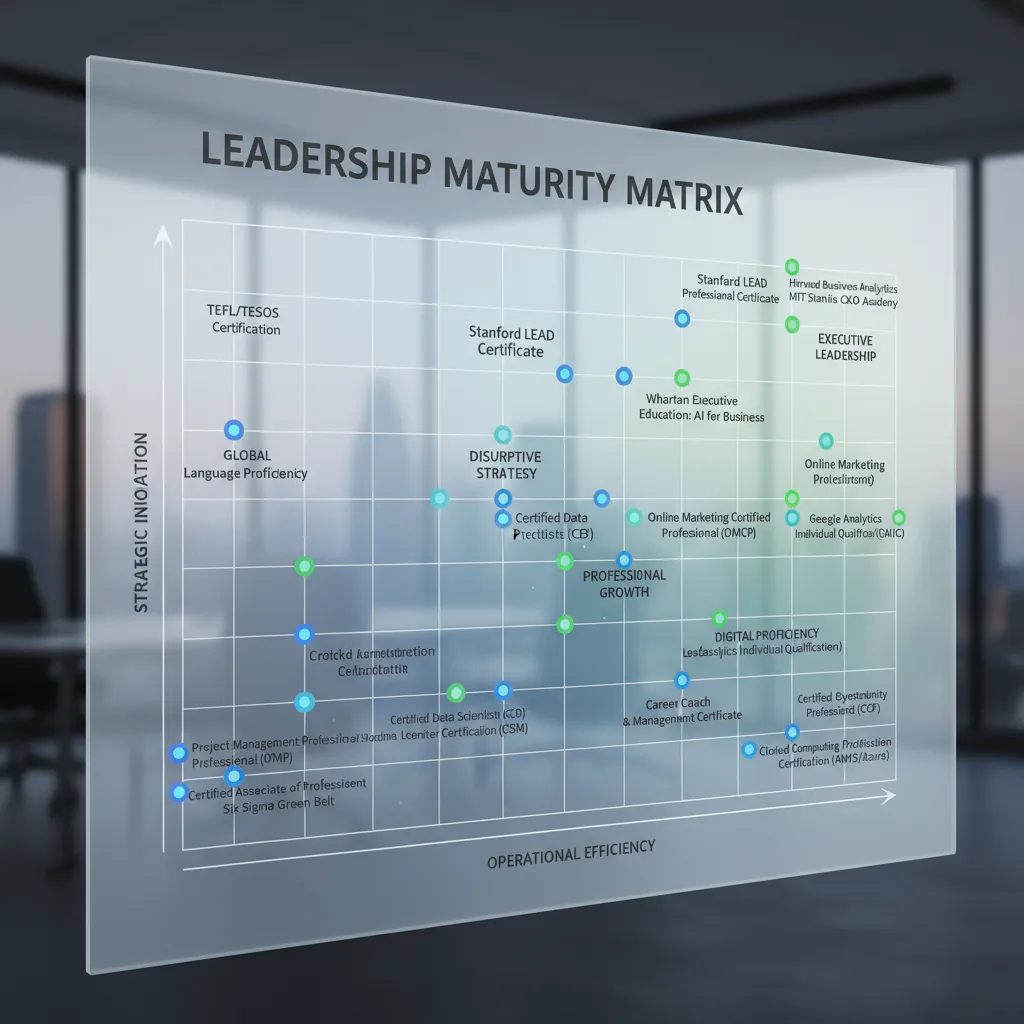
We didn’t just pick the most famous names. We evaluated these programs based on four critical ROI factors tailored for the 2025 economic landscape:
- 2025 Curriculum Relevance: Does it address the AI skills gap identified by the World Economic Forum?
- Salary Impact: Is there hard data (like the PMI report) proving income growth?
- Network Quality: Are you learning alongside peers who can actually advance your career?
- Speed to Value: Can you apply the skills immediately, or is it purely theoretical?
The “Ivy League” Executive Suite (Best for Prestige & Network)
When you need to signal authority to a board of directors or pivot into a high-level strategic role, brand association matters. However, the best programs today blend that prestige with cutting-edge tech literacy.
1. Wharton Executive Education: Leadership in the Age of AI
Best for AI Strategy
In the past, leadership meant “people skills.” In 2025, it means “people + machine skills.” Wharton has aggressively updated its curriculum to address the reality that marketing and operations are being rewritten by algorithms.
This isn’t about learning to code Python; it’s about understanding how to lead an organization where AI is a coworker, not just a tool. As Stefano Puntoni, Professor of Marketing at Wharton, noted regarding their 2025 focus: “Marketing is likely to be the business function most transformed by generative AI… It’s not just about convenience; it’s about making learning more effective.”
- Directly addresses the World Economic Forum’s prediction that leadership and social influence are top 2025 skills.
- Blended format options (Online + Campus).
- Immediate networking with C-level peers.
- High price point (often $10k+ depending on track).
- Requires significant weekly time investment.
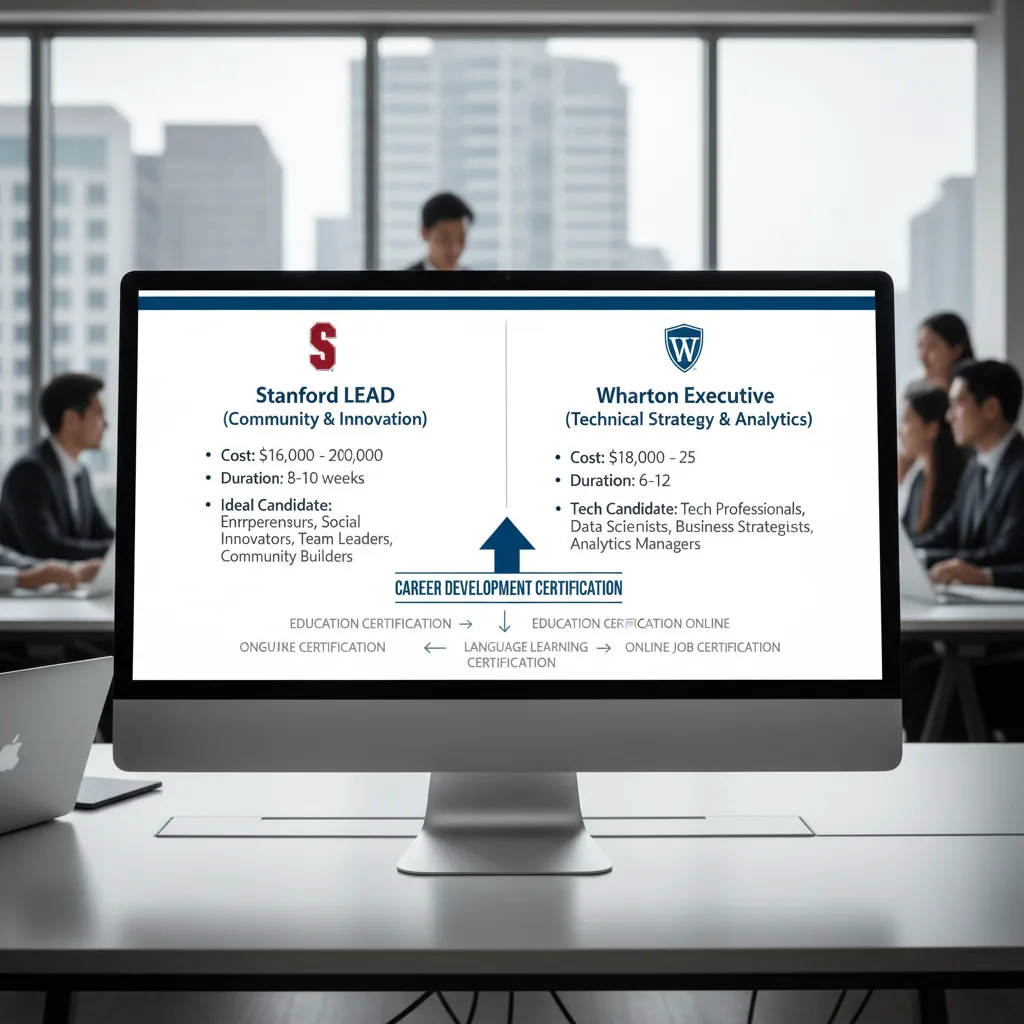
2. Stanford LEAD Online Business Program
Best for Innovation
If you are looking for an “MBA-lite” experience without the two-year pause on your career, Stanford LEAD is the gold standard. Unlike self-paced Coursera tracks, this is a high-touch, cohort-based program.
It focuses heavily on “Change Agility”—a critical skill given that 39% of worker skills will be disrupted by 2030, according to the World Economic Forum Future of Jobs Report. This program is best for leaders who need to drive innovation inside stagnant corporations.
The “Strategic Operator” Suite (Best for Hard Skills & Salary)
Sometimes, you don’t need a philosophy on leadership; you need a framework to get things done. These certifications are the heavy hitters for salary negotiation and operational excellence.
3. Project Management Professional (PMP)®
Best for Salary Growth
You might be thinking, “Isn’t PMP for project managers?” In 2025, that’s a mistake. PMP is the definitive certification for operational leaders. Whether you are a VP of Operations or a Director of Marketing, the ability to execute complex initiatives is what separates visionaries from dreamers.
The ROI here is undeniable. As mentioned earlier, PMI’s 2024 Earning Power report confirms a median U.S. salary of $130,000 for certification holders. If you are looking for the single best investment for immediate salary leverage, this is it.
Ideal Candidate: Leaders who manage cross-functional teams and budget responsibility.
4. Prosci Certified Change Practitioner
Best for Transformation
Managing the human side of change is arguably the hardest part of leadership. With LinkedIn’s 2024 Workplace Learning Report showing that career development has jumped to priority #4 for L&D professionals, organizations are desperate for leaders who can guide teams through transitions without causing burnout.
The Prosci ADKAR model is the industry standard. It’s not cheap (roughly $4,500), but for leaders overseeing digital transformation or mergers, it is a non-negotiable credential.
The “Future-Ready” Tech Leader (Best for Innovation)
You cannot lead a company in 2025 if you are technologically illiterate. These certifications bridge the gap between business strategy and the IT department.
5. MIT Sloan: Artificial Intelligence: Implications for Business Strategy
This course is designed specifically for the “non-technical” leader. It removes the intimidation factor of AI. You won’t be writing code; you will be analyzing how AI affects organizational design and value chains. Given the velocity of AI adoption, this certification signals to employers that you are not liable to be replaced by automation—you are the one directing it.
6. Certified SAFe® 6 Agilist
For leaders in software, product, or tech-heavy industries, traditional waterfall leadership is dead. The Scaled Agile Framework (SAFe) is how enterprises like FedEx and Chevron manage scale. Holding this certification proves you can lead “Agile at scale,” coordinating hundreds of employees across multiple time zones.
The “People-First” Leader (Best for Culture & Retention)
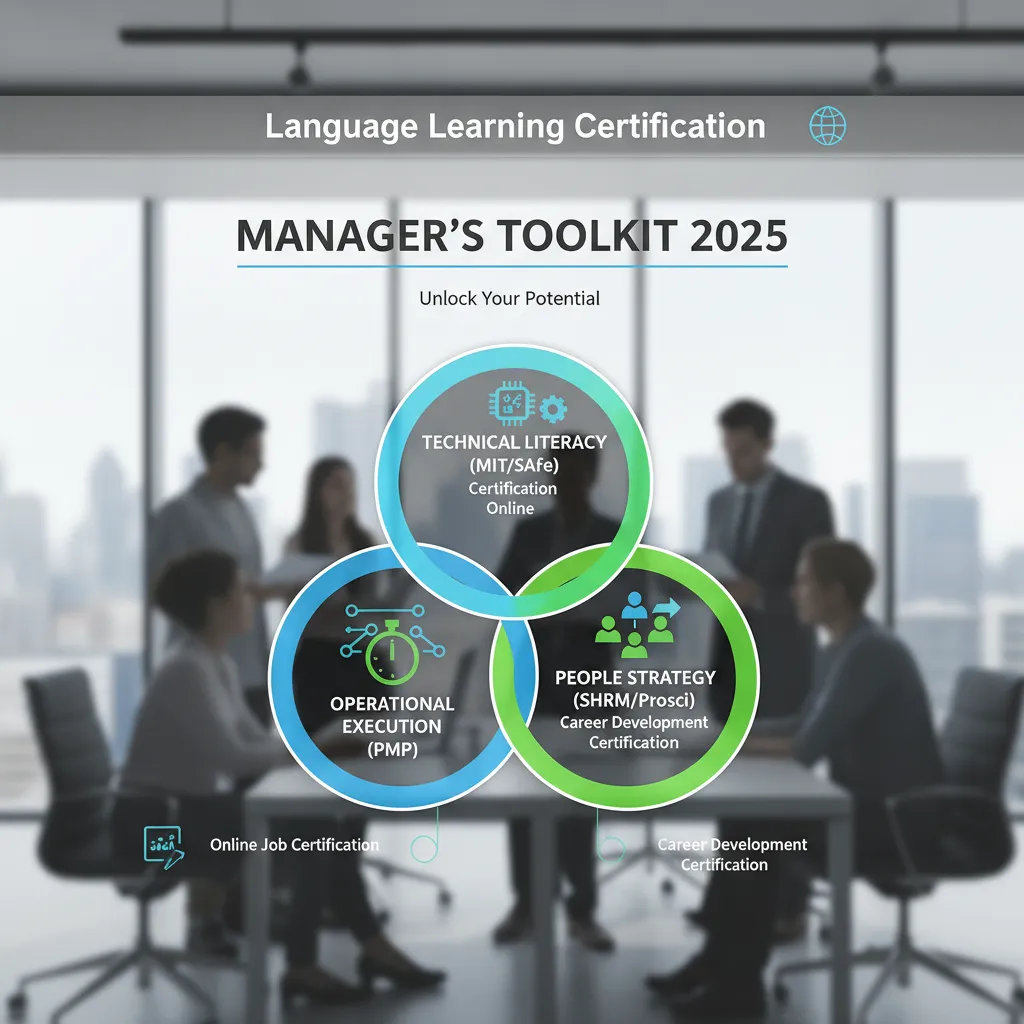
7. SHRM-SCP (Senior Certified Professional)
Best for Culture Strategy
We are facing a retention crisis. LinkedIn’s 2024 data indicates that 90% of executives are planning to increase or maintain L&D budgets specifically to keep people. The SHRM-SCP is not just for HR directors anymore; it is for any executive who considers “Talent Strategy” part of their portfolio.
Why SHRM-SCP over SPHR? The SHRM-SCP focuses more heavily on the behavioral competencies of leadership and business strategy, making it more applicable to general operational leaders than the compliance-heavy SPHR.
Critical Comparison: Certificate vs. MBA?
This is the most common question I get from clients: “Should I spend $10,000 on certifications or $100,000 on an MBA?”
In the current economy, speed is currency. An MBA takes two years. A certification takes 3 to 6 months.
Traditional degrees are slow to adapt. Online executive certificates are updating curricula in real-time. In fact, in a survey of learners, 76% said Harvard Business School Online had a bigger impact on their careers than other programs, and 31% earned a promotion immediately after completing a course.
My Verdict: Use certifications to pivot now or to solve a specific gap (like AI literacy). Use an MBA if you are looking for a total career reset or switching industries entirely.
FAQ: Career Development for Leaders
Which leadership certification commands the highest salary?
Based on 2024 data, the Project Management Professional (PMP) offers the clearest path to salary growth, with median salaries hitting $130,000 in the U.S. However, specialized executive certificates in AI strategy from Wharton or MIT are increasingly commanding premium consulting rates and C-suite packages.
Are online Ivy League certificates respected by employers?
Yes, perception has shifted dramatically post-pandemic. Employers value the specific skills gained. HBS Online data shows that 76% of learners reported a significant career impact. The key is applying the knowledge, not just listing the badge.
Which certification is best for C-suite transition?
For the C-suite, you need broad strategic oversight. Stanford LEAD or Wharton’s Executive Education programs are best suited here because they focus on organizational design, finance, and macro-strategy rather than day-to-day execution.
Conclusion: Choose Your “Leadership Gap”
The days of the “finish line” in education are over. As Jon Clifton, CEO of Gallup, stated in the 2024 Global Workplace Report, “When managers are burned out, companywide performance suffers.” The antidote to burnout is competence.
Don’t just collect acronyms for your LinkedIn profile. Choose the certification that fills your specific gap:
- Need a salary bump? Go for the PMP.
- Leading a digital overhaul? Get the Prosci Change Certification.
- Need to speak “Future”? Enroll in Wharton’s AI program.
The leaders who win in 2025 won’t be the ones with the oldest degrees; they will be the ones with the most current skills. Assess your gap, pick a program, and start leading with confidence.