

12 High-Income Digital Skills to Future-Proof Your Career in 2025
The numbers are enough to make anyone pause. According to the World Economic Forum’s Future of Jobs Report 2025, nearly 92 million jobs are expected to be displaced by technological shifts by 2030. That’s a scary statistic on the surface.
But here is the other side of the coin that fewer people talk about: in that same timeframe, 170 million new roles will emerge.
In my decade of experience working in the tech industry, I’ve seen waves of disruption before. But what’s happening right now with Artificial Intelligence isn’t just a wave; it’s a tide change. The difference between the professionals who get displaced and the ones who secure massive promotions comes down to one thing: a specific, high-income skillset.
You might be wondering, “Is it too late to pivot?” or “Do I need to go back to college?” The answer to both is a resounding no. This guide cuts through the noise. We analyzed real salary data from Glassdoor, ZipRecruiter, and trends from 2025 industry reports to rank the most useful digital skills that are actually paying over $100,000 right now.
Let’s future-proof your career.

The “AI-First” Skill Shift: Why 2025 is Different
Before we list the skills, we have to address the elephant in the room. A few years ago, “Digital Marketing” was a skill. Today, that’s not enough.
According to Coursera’s 2024/25 Global Skills Report, there was a staggering 1,060% year-over-year increase in global GenAI course enrollments. This signals that the market is already moving. The most valuable professionals in 2025 are what I like to call “Hybrid Professionals”—marketers who know Python, or designers who understand Large Language Models (LLMs).
— Kelly Monahan, Director at Upwork Research Institute (Source: Upwork 2024)
Tier 1: The “Gold Rush” Skills (Salaries $120k+)
These are the heavyweight skills. They require technical proficiency, but the barrier to entry is often lower than traditional software engineering because of new AI tools that assist you.
1. Generative AI & Prompt Engineering Avg: $136k
Many people mistakenly think prompt engineering is just typing questions into ChatGPT. It isn’t. High-level prompt engineering involves understanding the architecture of LLMs, reducing hallucinations, and integrating API workflows.
- The Data: According to Glassdoor’s February 2025 data, the average annual base salary for a Prompt Engineer is $136,141.
- Why it pays: Companies are desperate to automate workflows but lack the staff who understand how to “talk” to the models securely and effectively.
- Real-world application: You aren’t just writing blog posts; you are building a system that automatically reads customer emails, categorizes them by sentiment, and drafts responses for a human support agent to review.
2. Cloud Computing Architecture (AWS/Azure) Avg: $147k
AI models require massive computing power. They need a place to live, and that place is the cloud. As AI scales, the demand for people who can build and maintain cloud infrastructure is skyrocketing.
The Salary Surge
According to ZipRecruiter’s projected 2025 data, the average annual pay for a Cloud Architect in the United States has reached $147,236.
Satya Nadella, CEO of Microsoft, stated that “A golden age of AI is under way… it will reshape essentially every software category.” This reshaping happens in the cloud. Learning Amazon Web Services (AWS) or Microsoft Azure is essentially learning the infrastructure of the modern internet.

3. Cybersecurity & AI TRiSM Avg: $112k+
This is a critical pivot. Traditional cybersecurity is still huge, but the new frontier is AI TRiSM (Trust, Risk, and Security Management). This involves protecting AI models from data poisoning and prompt injection attacks.
According to Gartner’s Top Strategic Trends for 2025, by 2028, over 50% of enterprises will use AI security platforms to protect their AI investments. Currently, there is a massive shortage of talent here.
The Bureau of Labor Statistics projects a 32% growth rate for Information Security Analysts through 2032, which is significantly faster than average.
Tier 2: The Data & Logic Skills (Salaries $90k – $130k)
If you have an analytical mind but aren’t necessarily a “coder” by trade, these skills offer the best balance of difficulty and reward.
4. Data Science & Python (The “Data Storyteller”)
Data science used to be about complex math. Now, with AI tools handling the heavy calculation, the human value add is in interpretation. Can you look at the data and tell the CEO what to do next?
In a recent report, Upwork noted that the AI and machine learning category saw 70% growth in demand year-over-year. Learning Python is the gateway here. It is the language of AI, and it allows you to automate the boring parts of your job.
5. Blockchain for Enterprise
Forget cryptocurrency prices. The real value of blockchain in 2025 is in supply chain transparency and identity verification. With Deepfakes becoming common, being able to cryptographically prove that a piece of content is real (using blockchain tech) is becoming a high-value skill.
Tier 3: The Creative & Growth Skills (Salaries $70k – $115k)
This is where I see the most opportunity for freelancers and creatives to pivot. If you are a writer, designer, or marketer, you don’t need to quit your field—you just need to upgrade your toolkit.
6. AI-Augmented Digital Marketing
Digital marketing isn’t dead, but “manual” marketing is dying. The 2024 LinkedIn Workplace Learning Report highlighted that AI literacy is appearing in job descriptions six times more frequently than the previous year.
The Freelance Bonus: According to Forbes reporting on freelance trends, freelancers with AI skills are charging 40% higher rates on average than those without. Clients will pay a premium for a marketer who can use tools like Jasper, Midjourney, and Surfer SEO to produce 5x the results in half the time.
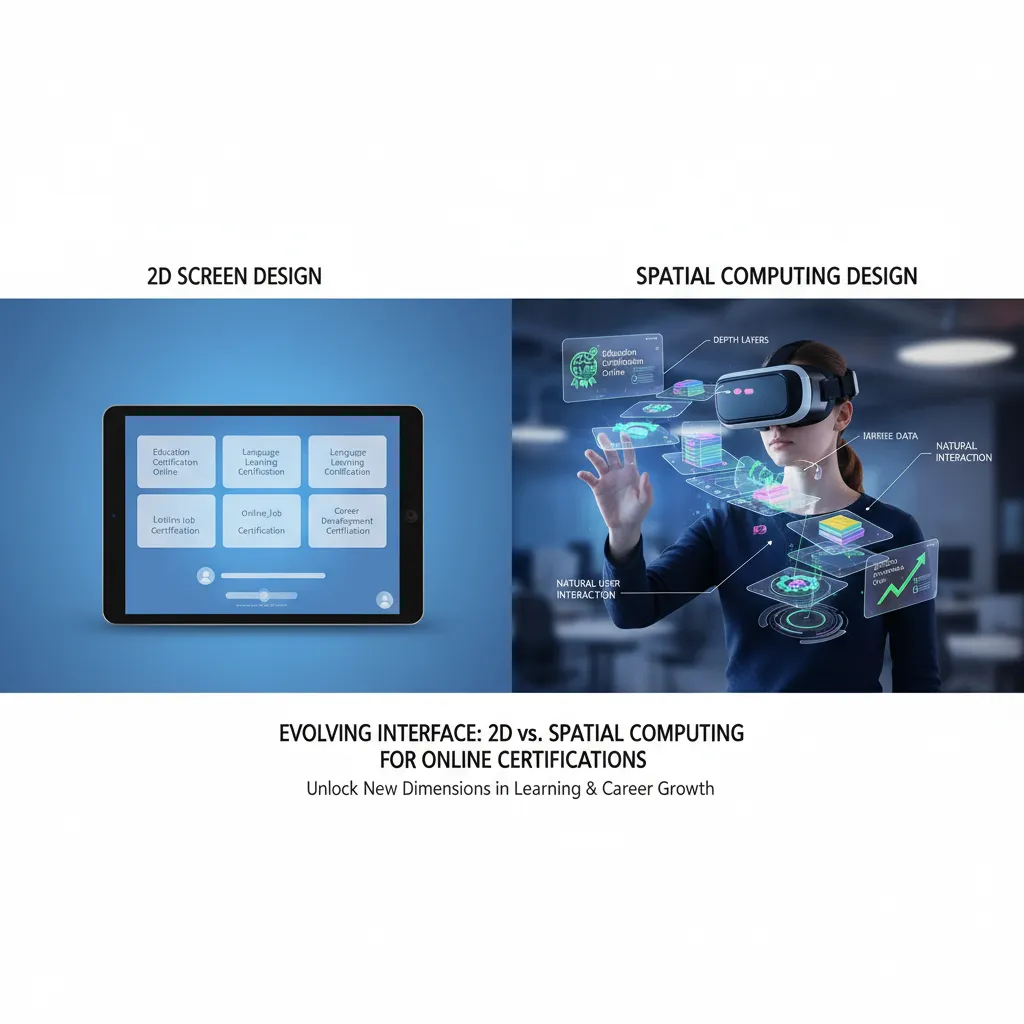
7. UX/UI Design (Spatial Computing Focus)
With the release of the Apple Vision Pro and Meta’s Quest 3, designing for 3D spaces (Spatial Computing) is a blue ocean. Most designers only know how to design for 2D screens. Learning Unity or Spline for 3D web design puts you in a very small, exclusive club of high-earners.
The “Barrier to Entry” Analysis
I know what you’re thinking: “Which one should I pick?” I’ve created this comparison based on current market difficulty versus income potential.
| Skill Cluster | Income Potential | Difficulty to Learn | Best For… |
|---|---|---|---|
| Cloud Architecture | High ($145k+) | High | Engineers & Systems Thinkers |
| Prompt Engineering | High ($135k+) | Medium | Writers & Logic-Minded Creatives |
| Cybersecurity | Medium-High ($112k+) | High | Detail-Oriented Problem Solvers |
| AI Marketing | Medium ($85k+) | Low-Medium | Communicators & Freelancers |
How to Learn These Skills: A 2025 Roadmap
The traditional education system is struggling to keep up with the speed of AI. A computer science degree curriculum written four years ago is likely obsolete today. Here is how professionals are actually upskilling.
1. The “Micro-Credential” Revolution
Employers are increasingly valuing “proof of skill” over degrees. Google and IBM offer professional certificates on platforms like Coursera that prepare you for these roles in under six months.
Take Amazon as an example. According to Amazon’s “Upskilling 2025” report, they committed $1.2 billion to train 300,000 employees. Graduates of their internal technical academy saw salary increases of up to 40% upon transitioning roles. This proves that the skills gap can be bridged rapidly with focused training.
2. Build a “Proof of Work” Portfolio
Don’t just take a course. Build something.
- For Cloud: Host a dynamic website on AWS using a serverless architecture.
- For Data: Scrape public data and create a visualization dashboard in Tableau or PowerBI.
- For AI: Build a custom GPT using OpenAI’s builder and document how it solves a specific business problem.
Frequently Asked Questions (FAQ)
Do I need strong math skills for Data Science in 2025?
This is a common misconception. While you need a foundational understanding of statistics, modern tools handle the complex calculus. Your role is increasingly about logic and verifying the AI’s output, rather than doing the manual computation yourself.
Can I learn these skills while working full-time?
Yes. In fact, that’s the best way to do it. PwC’s workforce research indicates that companies linking learning programs to business metrics generate 35% more ROI. Try to apply what you learn immediately in your current job—even if it’s just automating a spreadsheet—to reinforce the skill.
Which skill is the fastest to monetize?
If you want speed, AI-Augmented Digital Marketing or Prompt Engineering for content creation are the fastest. You can start offering freelance services on Upwork or Fiverr within weeks of mastering the tools, unlike Cloud Architecture which requires deep certification study.
Conclusion
The “future of work” isn’t coming; it’s already here. The data from the World Economic Forum and the salary figures from Glassdoor paint a clear picture: the economy is rewarding those who embrace digital complexity.
You don’t need to master all 12 skills. You just need to pick one. Whether it’s the structural power of Cloud Architecture, the creative logic of Prompt Engineering, or the defensive necessity of Cybersecurity, the opportunity is massive.
The best time to plant a tree was 20 years ago. The best time to learn these digital skills is today. Pick a path, start a course, and build your future.