
How to Get IT Certified Without a Degree: The 2025 Roadmap to Hired
The “Paper Ceiling” is crumbling. For decades, the university degree acted as an arbitrary gatekeeper, locking millions of talented individuals out of the technology sector. But if you are reading this feeling stuck or “locked out” because you don’t have a Bachelor’s, I have good news: the rules of engagement have changed.
I’ve watched the industry shift dramatically over the last few years. It used to be that HR algorithms would toss your resume in the digital trash bin if it didn’t list a four-year institution. Today, practical skills are becoming the new currency. In fact, according to Upwork Research Institute, 81% of C-suite executives now say they are adopting skills-based hiring practices, prioritizing what you can do over where you went to school.
However, I want to be real with you. Just because companies say they hire without degrees doesn’t mean it’s easy. You cannot simply apply to generic job postings and hope for the best. You need a strategy that proves your competence faster than a degree would.
This guide isn’t just a list of exams to take. It is a strategic roadmap based on verified 2024-2025 data, designed to help you bypass the degree requirement, build a “home lab” that proves your experience, and land a high-paying role in IT.
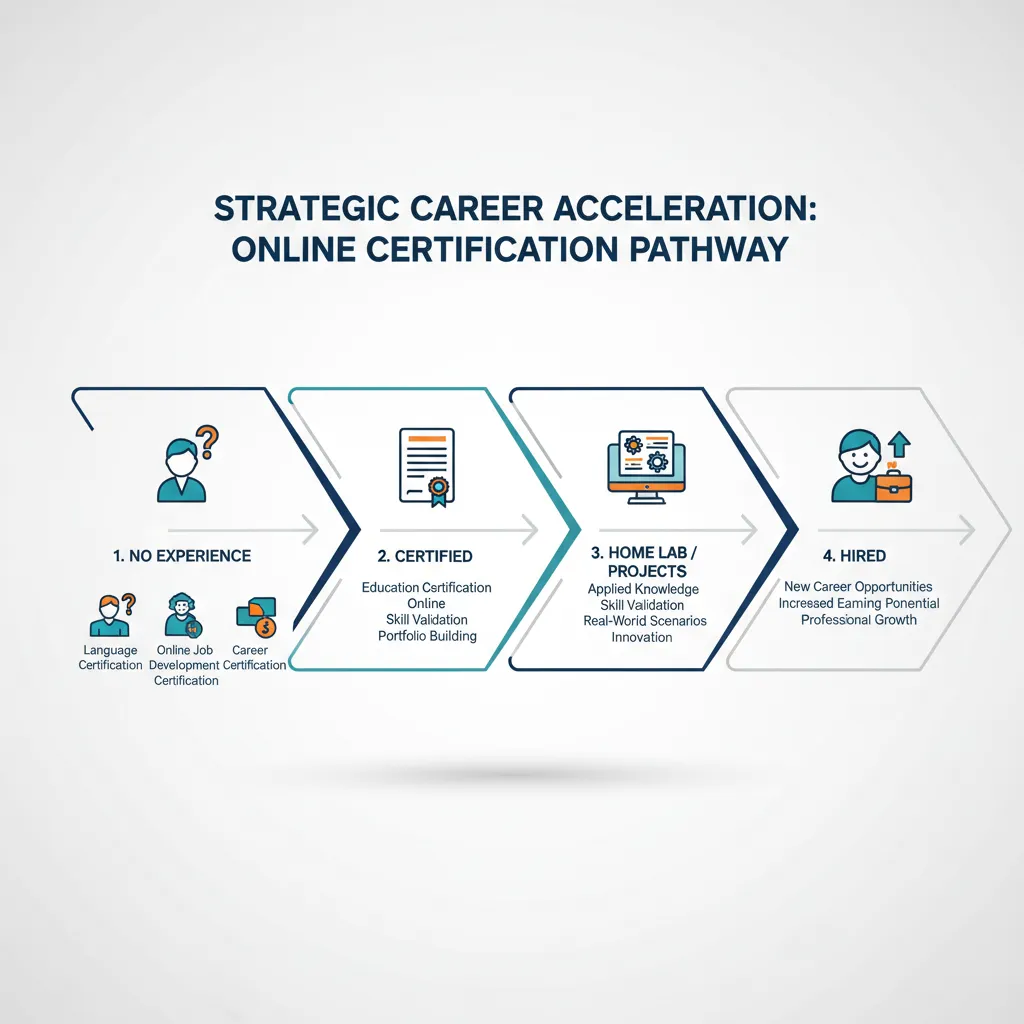
The Truth About “Skills-Based Hiring” in 2025
Before you spend a dime on exam vouchers, you need to understand the market you are entering. The narrative that “degrees are dead” is an exaggeration, but the reality is that the requirement for degrees is vanishing rapidly. This isn’t just charity from employers; it’s a business necessity.
Employers are realizing that non-degree holders often perform better. According to data from The Burning Glass Institute, non-degreed workers hired into roles that formerly asked for degrees have a retention rate 10 percentage points higher than their degree-holding colleagues. When companies hire you, you stay longer and work harder. That is your selling point.
of U.S. job postings on Indeed did not specify educational requirements in early 2024, signaling a massive opening for certified professionals.
Source: Indeed Hiring Lab, 2024
Furthermore, the financial incentive for you is massive. The same report from The Burning Glass Institute highlights that non-degreed workers stepping into these roles experience a 25% salary increase on average. We are talking about life-changing income shifts just by acquiring the right piece of paper—not a diploma, but a certification.
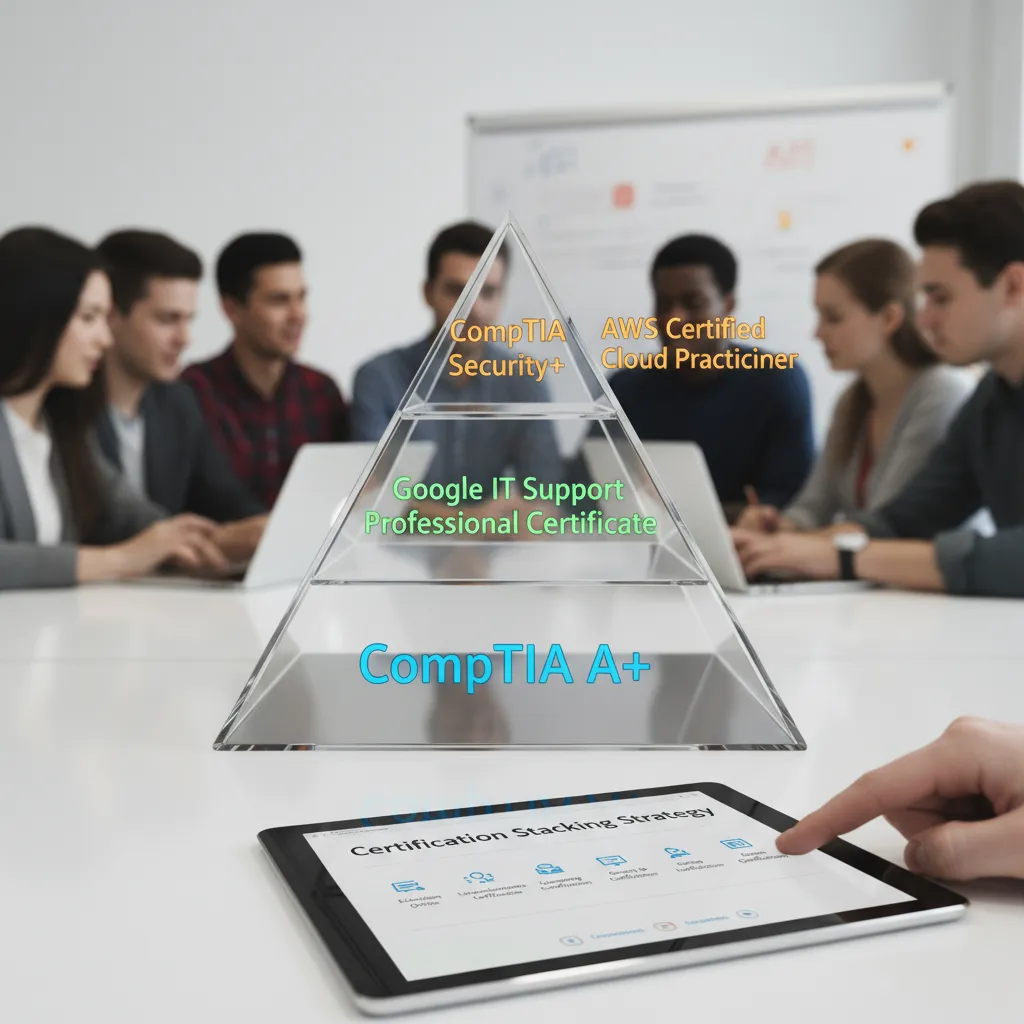
Step 1: The “Golden Trio” of Entry-Level Certifications
One of the biggest mistakes I see beginners make is “certificate collecting.” They spend thousands on random courses that HR managers don’t recognize. To get hired without a degree, you need recognized standards. I call this the “Golden Trio.”
1. The Foundation: CompTIA A+
If you have zero experience, this is non-negotiable. The CompTIA A+ is the industry standard for entry-level IT. It covers hardware, troubleshooting, operating systems, and basic security.
- Why it works: It proves to an employer that you won’t break the computer on your first day. It is the single most trusted credential for Help Desk roles.
- Cost vs. Value: It’s relatively affordable compared to a degree, and it effectively validates that you possess the baseline knowledge required for IT operations.
2. The Specialist: CompTIA Security+
This is where the money is. While A+ gets you the interview, Security+ gets you the salary bump. With cybersecurity threats exploding, this certification is often a mandatory requirement for government and Department of Defense (DoD) contracting jobs.
- The Strategy: Even if you are applying for a general support role, having the Security+ badge tells the hiring manager, “I understand compliance and data safety.”
3. The Modernizer: Google IT Support / AWS Cloud Practitioner
This is the modern layer on top of your foundation. The Google IT Support Professional Certificate is fantastic for practical, hands-on labs. According to the 2024 Google Career Certificates Impact Report, 75% of graduates report a positive career outcome within six months. Alternatively, the AWS Cloud Practitioner introduces you to the cloud, which is where all IT infrastructure is heading.
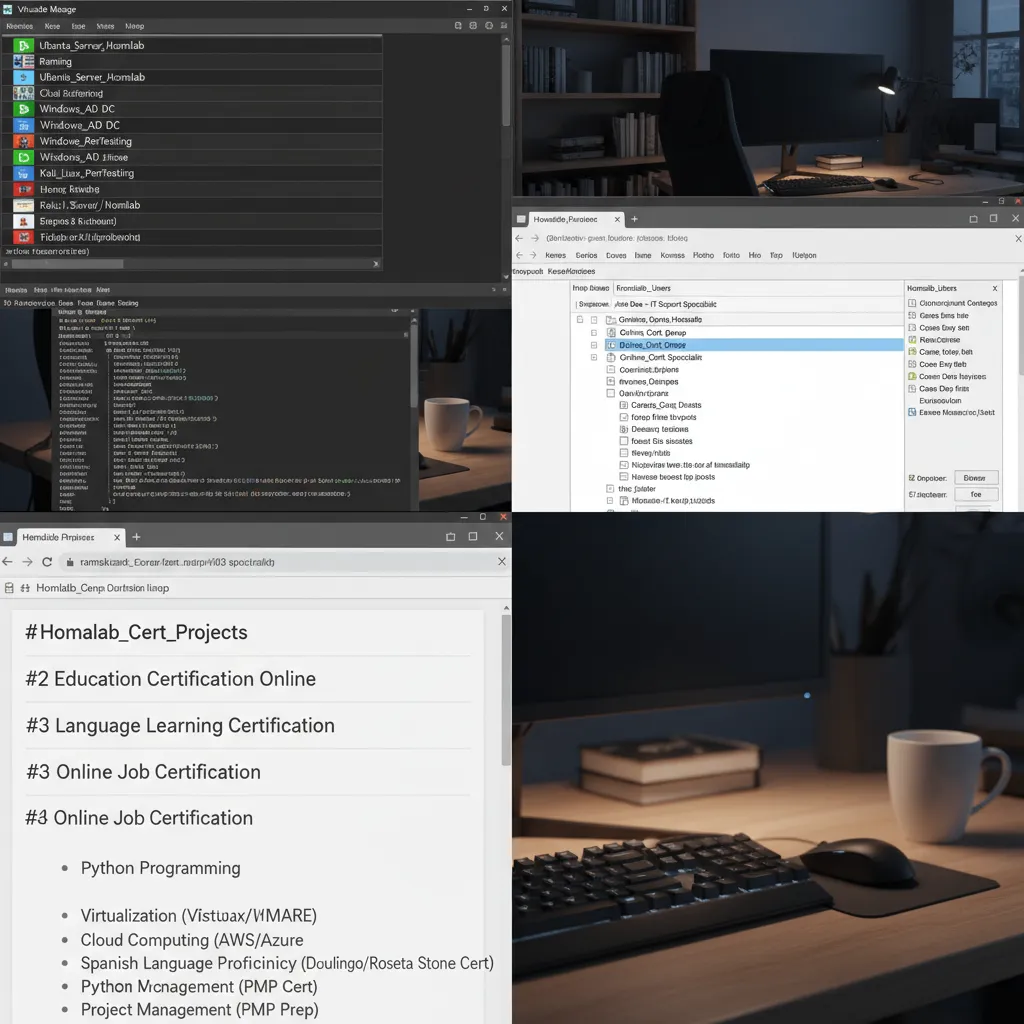
Step 2: Building a “Home Lab” (Your Degree Replacement)
Here is the secret that most “how-to” articles miss. You can get certified, but you will still face the dreaded question: “Do you have any experience?”
If you don’t have a degree, you cannot afford to say “no.” You must manufacture your own experience. In my opinion, a well-documented Home Lab is more impressive to a technical hiring manager than a generic Computer Science degree, because it shows passion and initiative.
How to Build a $0 Home Lab
You don’t need expensive servers. You need a laptop and curiosity.
- Virtualization: Download VirtualBox (free). This allows you to run “virtual” computers inside your main computer.
- Active Directory: Download a trial version of Windows Server. Set it up in VirtualBox. Create users, reset passwords, and set permissions. This is 80% of what an entry-level IT support person does.
- Cloud Projects: Create a free-tier AWS account. Host a simple static website or configure a storage bucket.
The Digital Portfolio
Do not just do the work—document it. Take screenshots of your Active Directory setup. Write a short guide on “How I configured a DHCP server.” Upload this to GitHub or feature it on your LinkedIn profile. When an interviewer asks about experience, you point to this portfolio and say, “I haven’t worked in an enterprise yet, but here is how I built an enterprise environment at home.”
Step 3: The “Tech-Adjacent” Backdoor Strategy
The front door (applying for “Junior Developer” or “IT Manager”) is crowded. The backdoor is wide open. I call this the “Tech-Adjacent” strategy.
Instead of fighting for purely technical roles, look for roles where your soft skills plus your new certifications make you a “unicorn.” These include:
- Implementation Specialist: Helping clients install software.
- Customer Success Manager (Technical): Managing accounts for software companies.
- Sales Operations: Managing the CRM and data for sales teams.
I recently tracked a case on Reddit (r/cscareerquestions, 2025) involving a burned-out video editor. He had no CS degree but realized his client-facing skills were valuable. He combined those soft skills with basic troubleshooting knowledge and applied for a Technical Support Engineer role—not a developer role. The result? He landed a position taking home $67k. His advice was crucial: “Stop applying to generic Junior Dev roles; apply to Support Engineering.”
Top Companies Hiring Without Degrees (Verified List)
Stop applying to companies that are stuck in the past. Focus your energy on organizations that data proves are friendly to non-graduates. The American Opportunity Index tracks this data specifically.
| Company | Why They Hire Non-Grads | Ideal Entry Role |
|---|---|---|
| Pioneered the “Certificates over Degrees” movement. | IT Support Specialist | |
| IBM | Removed degree requirements for 50% of U.S. jobs. | Apprentice / Tech Support |
| Costco / Grainger | High internal mobility scores for non-degreed workers. | Internal IT Operations |
| Capital One | Strong focus on skills assessment testing over pedigree. | Operations Coordinator |
According to the CompTIA State of the Tech Workforce 2025 report, tech jobs are projected to grow at twice the rate of the overall workforce. These companies need bodies, and they are willing to train the right people.
Salary Expectations & Career Progression
Let’s talk numbers. Is it worth the effort? The U.S. Bureau of Labor Statistics reports that the median annual wage for computer user support specialists was $60,340 in May 2024. That is your starting line.
The 5-Year Outlook
Year 1 (Help Desk): $45,000 – $60,000. You are learning the ropes, resetting passwords, and fixing printers.
Year 3 (SysAdmin / Network Engineer): $70,000 – $90,000. You have specialized (perhaps passed your CCNA or Azure Admin exams) and moved up.
Year 5+ (Cloud Architect / Cybersecurity Analyst): $100,000+. At this point, no one cares about your lack of degree. Your experience speaks for itself.

FAQ: Common Doubts for Non-Degree Holders
Is the Google IT Support Certificate enough to get a job?
On its own? It is difficult. It shows interest, but many employers view it as “pre-entry level.” I strongly recommend stacking it with the CompTIA A+ to validate that your knowledge meets strict industry standards.
I’m bad at math. Can I still work in IT?
Absolutely. Most IT roles—especially in support, networking, and system administration—require logic and troubleshooting skills, not advanced calculus. If you can solve a puzzle, you can work in IT.
Do employers respect “bootcamps”?
It varies. Some bootcamps cost $15,000 and offer little value. Accredited certifications like CompTIA or AWS are generally more respected by HR because they are standardized global exams, whereas bootcamp quality fluctuates wildy. Certifications are usually the safer, cheaper bet.
Conclusion: Your Move
The gatekeepers are losing their power. When 52% of job postings stop asking for degrees and retention rates for non-grads soar, the market is shouting a clear message: Skills win.
You have a choice. You can continue to feel limited by a credential you don’t have, or you can start building the credentials that matter today. By securing the “Golden Trio” of certifications, building a home lab that proves you can do the work, and targeting tech-adjacent roles, you aren’t just looking for a job—you are building a career proof against the future.
Don’t wait for permission. Open a new tab, download the exam objectives for CompTIA A+, and start studying. Your future self is waiting.