
The Best Language Certificates for Jobs in 2025: Ranked by ROI & Employability
Adding a recognized language certificate to your resume doesn’t just look good—it pays actual dividends. In my years consulting on career development, I’ve seen candidates get passed over simply because they listed “Conversational Spanish” without proof, while their competitors flashed a DELE B2 certificate and landed the interview.
The financial impact is undeniable. According to Afni Careers (Dec 18, 2024), bilingual employees earn between 5% and 20% more on average than their monolingual counterparts. But here is the problem most job seekers face: the landscape of certification is messy. Some exams expire in two years, some are discontinued (RIP Cambridge BEC), and others are great for immigration but useless for getting hired.
In this definitive guide, I’m cutting through the noise. We will analyze the 2025 landscape of language testing, filtering out the academic exams to focus purely on ROI (Return on Investment) and Employability. Whether you are targeting a multinational in Tokyo or a tech firm in Berlin, this is your roadmap.
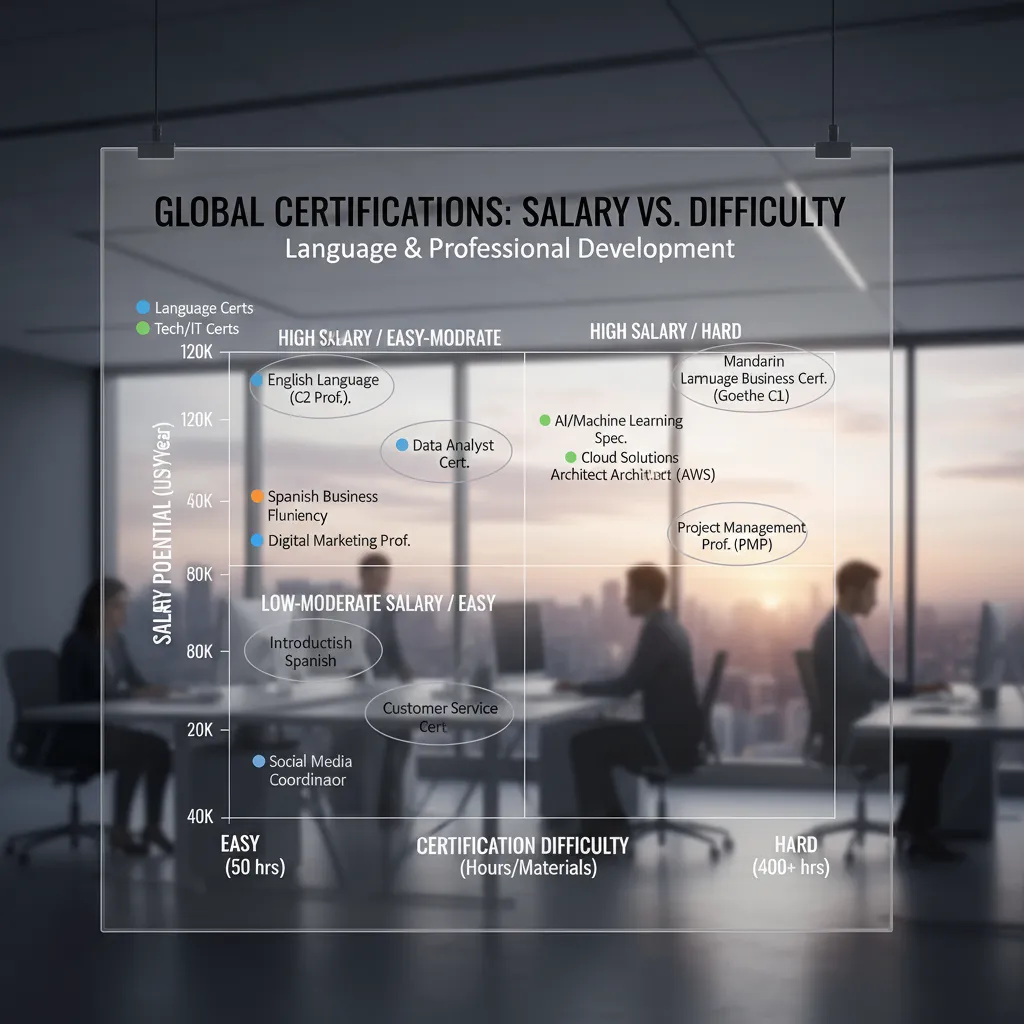
Table of Contents
The “Big Three” Business English Certificates (ROI Analysis)
English remains the undisputed king of the corporate world. A 2024 Duolingo Language Report found that English remains the most popular language to learn, ranking #1 in 135 countries. However, telling an employer “I speak English” isn’t enough. You need specific validation.
Here are the three certificates that actually matter in 2025.
1. TOEIC (Test of English for International Communication)
If you are looking for a corporate job in Asia (specifically Japan, Korea, or Vietnam) or France, the TOEIC Listening & Reading test is non-negotiable. It is the metric by which HR departments screen resumes.
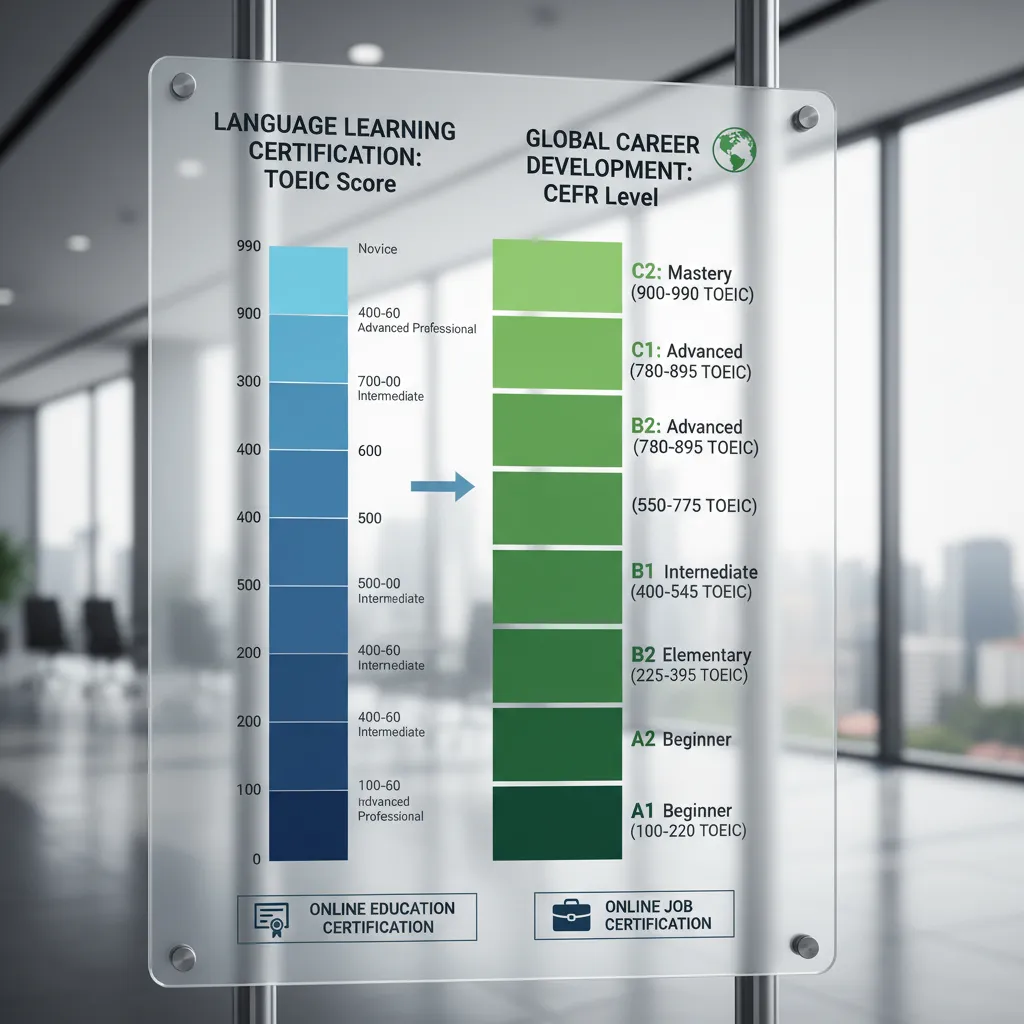
Unlike academic tests, TOEIC focuses strictly on workplace communication—emails, meetings, and telephone conversations. Scores range from 10 to 990. In my experience, a score above 850 is the “magic number” that signals C1 proficiency to international employers.
2. Linguaskill Business (The New Standard)
Crucial Update for 2025: Many outdated blogs still recommend the Cambridge BEC (Business English Certificate). You must ignore this advice. Cambridge Assessment English discontinued the BEC exams in 2024. They have been fully replaced by Linguaskill Business.
Linguaskill is an adaptive, AI-powered online test that provides results in 48 hours. Employers love it because it’s fast and granular. It doesn’t just give you a “Pass/Fail”; it aligns your score perfectly with the CEFR (Common European Framework of Reference) levels.
3. IELTS General Training
It’s important to distinguish between getting a job and getting a visa. If you are applying for a Skilled Worker Visa in the UK, Canada, or Australia, governments almost exclusively require the IELTS General Training (or CELPIP).
However, for private sector employment, IELTS is often viewed as too academic. Use IELTS for the border control agent; use TOEIC or Linguaskill for the hiring manager.
Spanish Certifications: DELE vs. SIELE
The demand for Spanish is exploding. According to Preply’s 2024 analysis, demand for Spanish speakers in the US is 7x greater than the second-place language, with over 200,000 vacancies. But which test should you take?
DELE (Diplomas de Español como Lengua Extranjera)
The DELE is the “old guard.” It is prestigious, issued by the Spanish Ministry of Education, and critically, it never expires. Once you have a DELE B2 or C1, it stays on your resume forever. However, it is paper-based, held only on fixed dates, and takes months to grade.
SIELE (Servicio Internacional de Evaluación de la Lengua Española)
If you need a certificate next week for a job application, SIELE is your savior. It is digital, adaptive, and you get your results in roughly three weeks. The catch? It is only valid for five years.
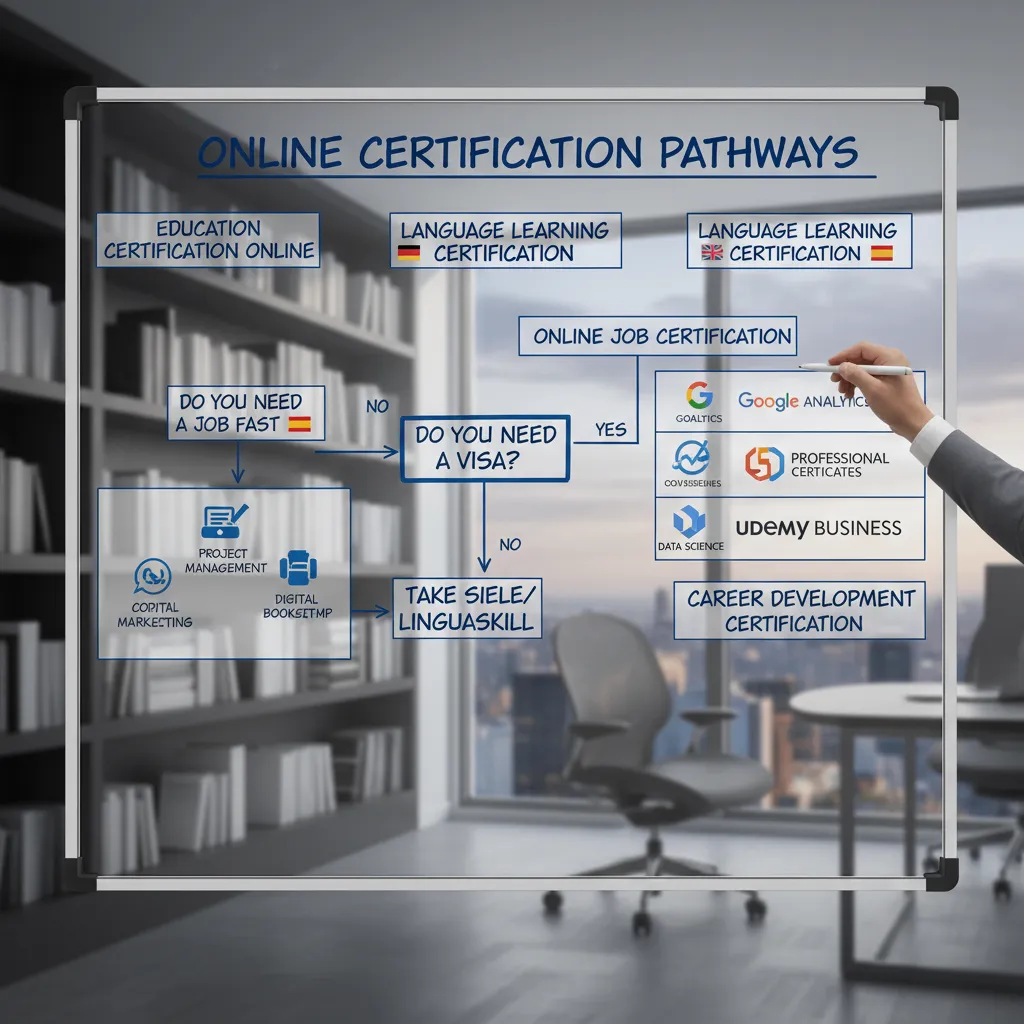
My Recommendation: If you are building a long-term resume, invest the time in DELE. If you are rushing to meet a job requirement deadline, take the SIELE.
German Proficiency: Goethe-Zertifikat vs. Telc
Germany has a massive skilled labor shortage, making it a prime destination for engineers and medical professionals. According to Skillbee (May 4, 2025), the Goethe-Zertifikat B2 is a common requirement for work visas or residency applications in Germany.
Goethe-Zertifikat
This is the “Gold Standard.” Recognized globally, a Goethe C1 certificate tells employers you can handle complex negotiations. It is highly academic and difficult, but it carries the most prestige in corporate environments (Mercedes, Siemens, BMW).
Telc (The European Language Certificates)
Telc is the practical cousin of Goethe. It is heavily favored in the medical field. If you are a nurse or doctor looking to work in Germany, you will specifically need the Telc Deutsch B2-C1 Medizin. It focuses less on literature and more on patient communication and medical terminology.
French for Professionals: DFP vs. DELF
While the DELF (Diplôme d’Études en Langue Française) is the most famous French exam, it is a general proficiency test. For career advancement, I often steer clients toward the DFP (Diplôme de Français Professionnel).
The DFP is issued by the Paris Chamber of Commerce and Industry. It is hyper-specific. You can get DFP certifications in Business, International Relations, Tourism, and Healthcare. Having a “DFP Affaires C1” looks significantly more impressive to a multinational employer than a generic DELF score, as it proves you know the vocabulary of contracts and commerce.
Asian Languages: The Specifics for Mandarin & Japanese
This is where things get tricky. The approach for Asian languages requires what I call a “Stacking Strategy.”
Mandarin Chinese: HSK (Hanyu Shuiping Kaoshi)
For China, there is only one game in town: the HSK. However, you need to be aware of the “HSK 3.0” update. The system has expanded from 6 levels to 9. While HSK 5 or 6 used to be fluent, the new HSK 7-9 levels are now the benchmark for high-level translation and academic roles.
For most corporate jobs, HSK 5 is the minimum entry requirement for foreigners.
Japanese: The JLPT vs. BJT Strategy
Most learners rush to take the JLPT (Japanese-Language Proficiency Test) N1 or N2. While this is essential for visa points, it doesn’t actually test your ability to work. The JLPT has no speaking or writing section.
This is why I recommend the “stack.” Take the JLPT N2/N1 to satisfy the government visa requirement. Then, take the BJT (Business Japanese Test) to impress the hiring manager. According to J-CALP (June 2, 2025), a BJT score of 480+ earns 15 points for the Highly Skilled Foreign Professional Point System—equivalent to passing JLPT N1—but it specifically proves you can answer a phone and write a business email.
The Financial Impact: Salary & Employability Data (2024-2025)
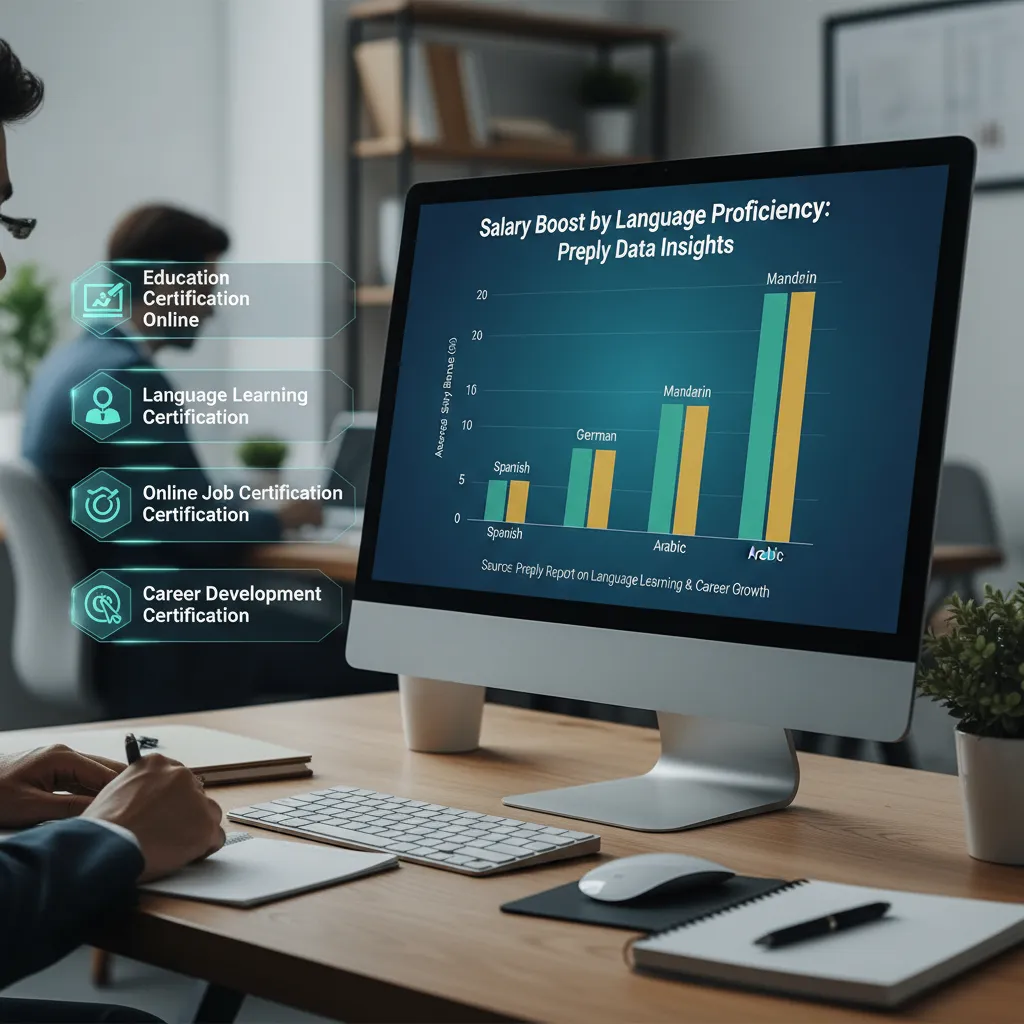
Let’s talk numbers. Why go through the stress of these exams? Because the ROI is tangible. In a July 8, 2024 report by Language Trainers, data showed that Bilingual MBA graduates in the United States earn 22% more for their starting salaries compared to monolingual graduates.
Furthermore, the specific language you choose matters. Preply’s July 24, 2025 update revealed some surprising top earners:
- United Kingdom: Arabic is the best-paid second language, with an average salary of £43,903.
- United States: Hindi speakers cash in with an average listed salary of $76,106.
FAQ: Common Questions on Language Certification
Which language certificate is valid for life?
Generally, the Cambridge (C1/C2) for English, DELF/DALF for French, DELE for Spanish, and Goethe-Zertifikat for German do not expire. In contrast, exams like IELTS, TOEIC, and SIELE usually expire after two to five years.
Is the Duolingo English Test accepted for jobs?
While the Duolingo English Test gained massive traction for university admissions during the pandemic, it is generally not accepted by major corporate employers for direct hiring yet. Stick to TOEIC or Linguaskill for your resume.
Can I just put “Fluent” on my resume without a certificate?
You can, but it’s risky. In 2025, with Applicant Tracking Systems (ATS) scanning resumes, having the specific keyword of a certification (e.g., “TOEIC 900” or “DALF C1”) helps you pass the automated filter. Self-assessment is subjective; certification is objective verification.
Which HSK level is required for jobs in China?
Historically, HSK 5 was the gateway for employment. However, with the introduction of HSK 3.0, top-tier firms are increasingly looking for proficiency that aligns with the new, stricter standards. HSK 5/6 is still the safe baseline for general professional roles.
Conclusion: The Verdict for Your Career
The “best” certificate depends entirely on your immediate goal. If you are looking for a visa to move abroad, stick to the government mandates (IELTS, Telc, JLPT). But if you are already in the country or applying to a multinational corporation, prioritize the business-specific exams: TOEIC for English, DFP for French, and the BJT for Japanese.
In a world where Coursera’s 2025 Global Skills Report shows GenAI enrollments surging 195%, human communication remains the skill that AI cannot fully replicate. A language certificate is more than a piece of paper; it is proof of your ability to connect, negotiate, and bridge cultures. Choose the one that doesn’t expire, or the one that gets you the interview next week—just make sure you have one.