

Professional Leadership Certification: The 2025 Guide to ROI & Career Growth
In 2024, the corporate world hit a sobering milestone. According to the DDI Global Leadership Forecast 2023-2024 (Source), there has been a 17% drop in the number of leaders who say their company has high-quality leaders. This is the steepest decline in a decade.
You might be wondering: “Why does this bad news matter to me?”
It matters because where there is a gap, there is opportunity. While organizations are scrambling to fix their “trust recession,” professionals who step up with verified, accredited leadership credentials are commanding a premium. We aren’t just talking about a pat on the back. We are talking about salary leverage, promotion velocity, and career insulation against layoffs.
I’ve reviewed hundreds of resumes in my time working with executive teams. I can tell you exactly when a candidate’s “leadership skills” section is fluff, and when it’s backed by rigorous methodology. In this guide, we are going to move beyond the generic lists. We will analyze the ROI of top credentials, compare them to the traditional MBA, and give you the exact script to get your employer to pay for it.

Why Leadership Credentials Matter Now (The Data)
Let’s get one thing straight immediately: There is a massive difference between a Certificate and a Certification (Credential).
- Certificate: You paid a fee, watched some videos, and maybe took a quiz. It proves you learned something.
- Credential/Certification: You passed a rigorous exam, met experience prerequisites, and committed to continuing education (CEUs). It proves you are something (e.g., a PMP or CPM).
The market values the latter significantly more. Here is the financial reality.
Holders of the PMP certification earn a median salary 33% higher than those without it, averaging $120,000 in the U.S.
According to the PMI Salary Survey 13th Edition (2024 Release)
The Trust Gap and Burnout Crisis
It’s not just about money; it’s about survival. Manager burnout is real. According to the Gallup State of the Global Workplace 2024 report (Source), 56% of managers are actively looking to leave their jobs, and manager stress is at an all-time high.
Why are they so stressed? Often, it’s because they were promoted for being good individual contributors but were never given the toolkit to lead. A professional credential provides that framework. It turns “guessing” into “executing.”
“Trust is the currency of leadership. In 2024, we are seeing a ‘trust recession’ where only 46% of leaders trust their direct managers to do what is right.”
— Stephanie Neal, Director, DDI Center for Analytics (2024)
Top Professional Leadership Credentials for 2025
If you are going to invest your time and money, you need to pick a credential that holds weight in the boardroom. Based on ROI, accreditation rigor, and market demand, these are the top contenders for 2025.
1. Certified Professional Manager (CPM)
Target Audience: General Managers across all industries.
Accrediting Body: Institute of Certified Professional Managers (ICPM).
The CPM is the “classic” leadership designation. It doesn’t care if you are in IT, healthcare, or retail. It focuses on the universal competencies of management: planning, organizing, leading, and controlling. Unlike a university course, this is a designation you put after your name.
Why it wins: It forces you to demonstrate competency in soft skills, which the World Economic Forum Future of Jobs Report 2023 (Source) cites as a top priority, noting that “Leadership and Social Influence” is a critical skill for the next five years.
2. Project Management Professional (PMP)
Target Audience: Technical leaders, Project Managers, and Operational Leads.
Accrediting Body: Project Management Institute (PMI).
I know what you’re thinking: “Isn’t this for project managers?” Yes, but in the modern agile organization, everything is a project. The PMP has evolved. The current exam is heavily weighted towards “People” (42%)—leading teams, managing conflict, and emotional intelligence.
The ROI: As mentioned earlier, the 33% salary advantage makes this the highest financial ROI credential on this list.
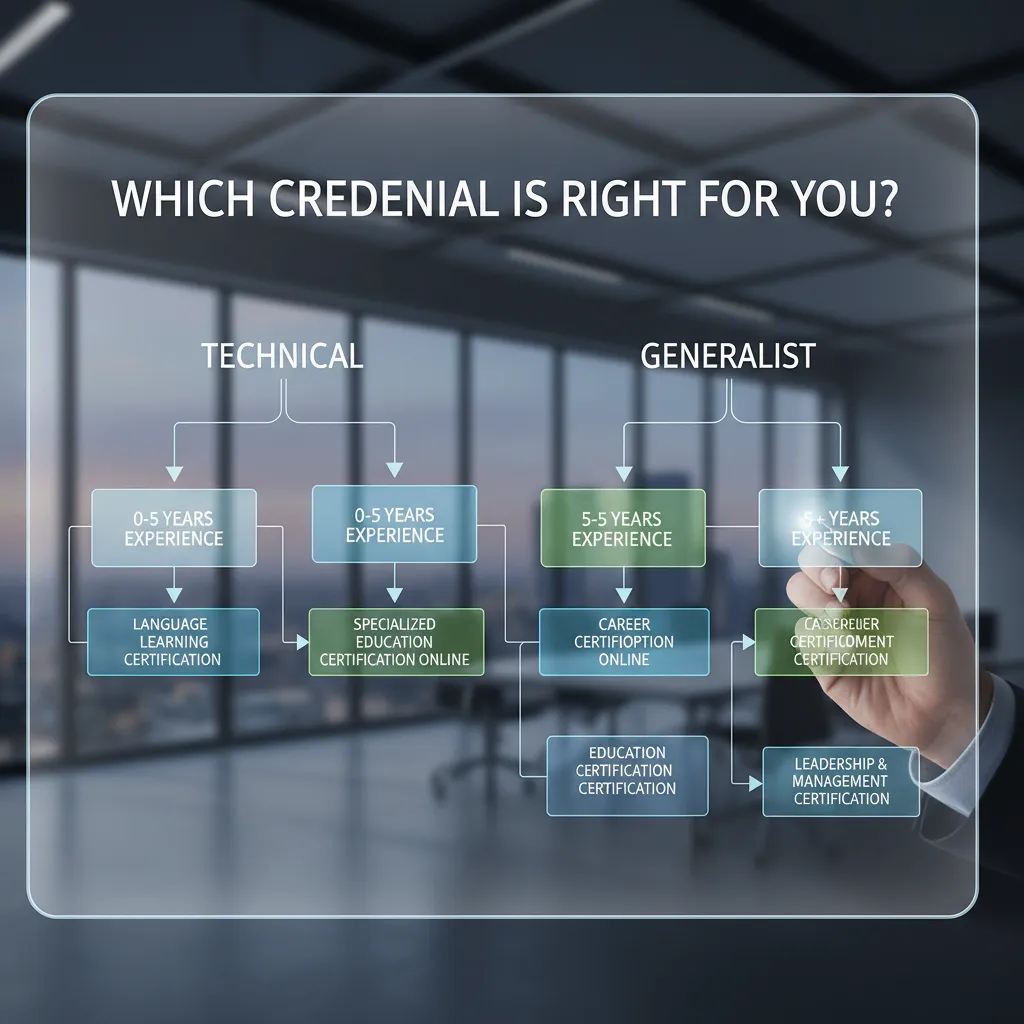
3. SHRM Senior Certified Professional (SHRM-SCP)
Target Audience: HR Leaders and Talent Managers.
Accrediting Body: Society for Human Resource Management.
Leadership often involves navigating complex human dynamics. If your role involves organizational culture, the SHRM-SCP is the gold standard. It proves you can link people strategy to business results.
4. University Certificates (HBS, Wharton, Cornell)
Target Audience: Mid-to-Senior level executives looking for brand prestige.
These technically fall under “Certificates” rather than “Credentials” (as you don’t usually renew them), but the network effect is undeniable. Specifically, Harvard Business School Online reports impressive outcomes.
The ROI of Leadership Certification: Is It Worth It?
Let’s look at the cold, hard numbers. I often hear skeptics say, “Experience is the only teacher.” While experience is vital, certification is the accelerator. It validates that experience to people who don’t know you (like recruiters).
Salary Impact Analysis
We’ve discussed the PMP’s 33% boost and the HBS $17k average raise. But there is also the cost of inaction. According to Gallup’s 2024 data, low employee engagement costs the global economy $8.8 trillion (Source). Companies are desperate for leaders who can stop this bleeding. If you can position your certification as a tool for retention, you become invaluable.
Promotion Velocity
According to the LinkedIn Workplace Learning Report 2024 (Source), organizations with strong learning cultures see 57% higher retention rates. When you earn a credential, you signal to your employer that you are part of that learning culture. It puts you on the shortlist for internal mobility.
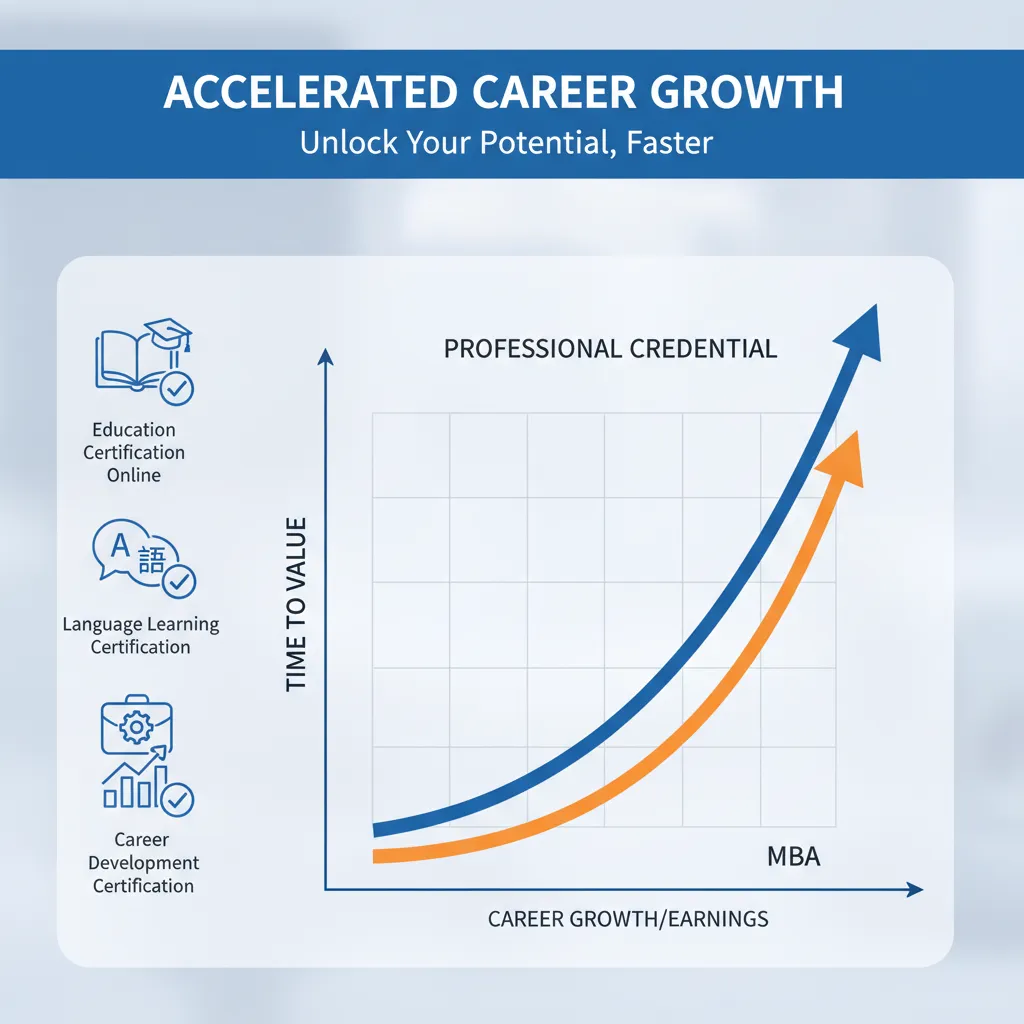
Certification vs. MBA: A Cost-Benefit Analysis
This is the most common question I get: “Should I get a PMP or an MBA?”
In my opinion, the MBA is a long-term marriage, while a certification is a strategic partnership. An MBA is fantastic for a total career pivot, but if you just want to level up your leadership now, the math favors certification.
| Factor | Professional Credential (e.g., PMP, CPM) | Traditional MBA |
|---|---|---|
| Time Commitment | 3 – 6 Months | 2 Years (Full-time) |
| Average Cost | $500 – $3,000 | $50,000 – $150,000+ |
| Content Focus | Specific, practical toolkit | Broad, theoretical business overview |
| ROI Speed | Immediate (Salary bump in < 1 year) | Long-term (3-5 year break-even) |
Step-by-Step Guide to Earning Your Credential
Ready to move forward? Don’t just sign up blindly. Follow this strategic roadmap.
Step 1: Gap Analysis
Look at your current role and your desired role. Are you missing financial acumen? Go for a CPM or a Wharton finance certificate. Are you struggling to organize your team’s workflow? Go for PMP or Agile certification.
Step 2: Employer Sponsorship (The “Retention” Argument)
Never pay for these out of pocket if you don’t have to. Most companies have professional development budgets that go unused. But you have to ask the right way.
Do not say: “I want to take this course.”
Say: “I want to help us reduce turnover.”
Here is a template you can copy and paste:
Hi [Manager Name],
I’ve been researching ways to improve our team’s efficiency and retention rates this quarter. According to recent data from LinkedIn Learning, companies with strong learning cultures see 57% higher retention rates.
To support this, I would like to pursue the [Name of Credential]. This program specifically covers [Skill 1] and [Skill 2], which directly align with our upcoming Q3 goals.
The cost is $[Cost], but based on industry data, certified leaders in this field typically drive a [X]% increase in project efficiency. I’d love to discuss getting this sponsored by the company, with the agreement that I will present a “Key Takeaways” workshop to the team upon completion.
Best,
[Your Name]
Step 3: Exam Preparation
If you choose a true credential like the PMP or SHRM-SCP, respect the exam. The failure rates are high for a reason. Plan for 60-80 hours of study time. Treat it like a college final.
FAQ: Navigating the Credential Landscape
Which leadership certification is best for a resume?
The PMP is arguably the most recognized globally across industries. However, for pure management roles, the Certified Professional Manager (CPM) is highly respected. If you are in a specific niche like IT, look at ITIL or Agile certifications.
Do leadership certificates actually increase salary?
Yes. As noted earlier, Harvard Business School Online data shows a $17,000 average increase for their learners, and PMI data shows a 33% bump for PMP holders. The correlation between verified skills and compensation is strong.
Can I get a leadership credential online?
Absolutely. In fact, most top-tier programs, including those from Ivy League universities and professional bodies like PMI, are now fully accessible online. The “online stigma” is dead, provided the institution is accredited.
Conclusion: Future-Proof Your Leadership
The workplace of 2025 and beyond is volatile. AI is automating technical tasks, which means the “human” skills—leadership, empathy, strategy, and social influence—are becoming the premium currency.
According to the World Economic Forum, 44% of workers’ core skills are expected to change in the next five years. You cannot rely on what you learned a decade ago. Earning a professional leadership credential isn’t just about a badge on your LinkedIn profile; it’s about building a defensive moat around your career.
You have the data. You have the funding script. The only thing left is to select your path. Don’t just manage the status quo—lead with verification.