
Can I Get a Language Certificate for Free? (The 2025 Guide to Valid & Fake Certs)
We need to talk about the “free certificate” trap.
In my decade of experience reviewing educational credentials and working with recruitment strategies, I’ve seen countless resumes rejected for one simple reason: the candidate listed a “participation badge” as a professional qualification. They spent 50 hours on an app, printed a PDF, and thought they were proving fluency. They weren’t.
Here is the hard truth: “Free” often means “worthless” in the eyes of an HR manager—but not always. There is a massive difference between a certificate that says you completed a course and one that proves you speak the language.
The stakes are high. According to the 2025 “Making Languages Our Business” report by ACTFL, 9 out of 10 U.S. employers rely on employees with language skills other than English. Yet, proving those skills without spending $200+ on a TOEFL or IELTS exam is a navigational nightmare.
You might be wondering: Is it actually possible to get a recognized, legitimate language certificate for $0 in 2025?
The answer is yes, but the list of valid options is incredibly short. This guide strips away the marketing fluff to reveal the only free language certificates that actually hold weight on a CV, resume, or LinkedIn profile.
The Reality of Free Language Certificates: “True Free” vs. “Freemium”
Before you start downloading PDFs, you need to understand the distinction that most blogs gloss over. In the world of online credentials, there are two types of documents:
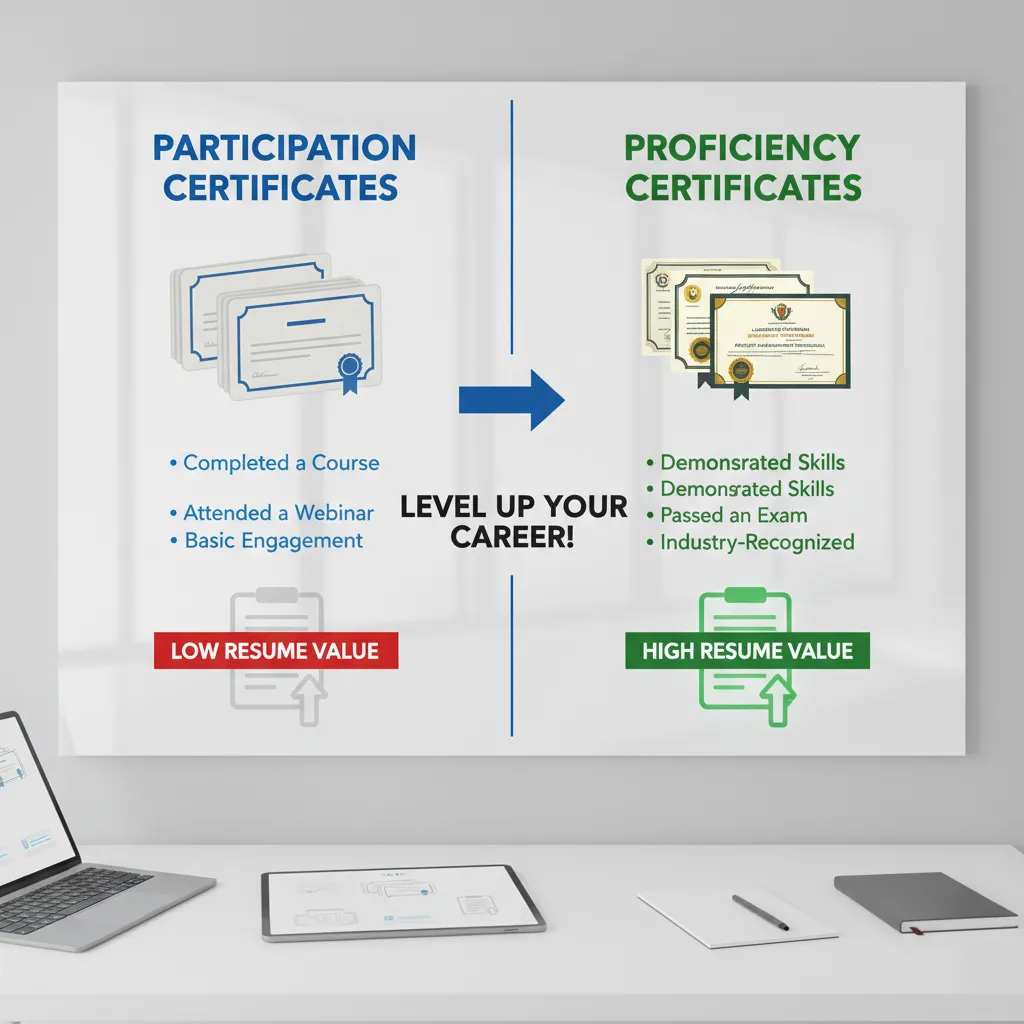
- Certificate of Completion: This proves you clicked through all the slides or watched the videos. It measures effort, not skill.
- Certificate of Proficiency: This proves you can read, write, and speak at a specific level (A1-C2). It measures competence.
Employers care about the second one. They want to know if you are CEFR aligned (Common European Framework of Reference for Languages). If your certificate doesn’t mention CEFR levels, it is likely just a souvenir.
This market is exploding. Preply’s 2024 data indicates the global language learning market is projected to reach $115 billion by 2025. With that growth comes a flood of low-quality certificates. Your goal is to find the diamonds in the rough.
The Gold Standard: EF SET (The Only Recognized Free Proficiency Exam)
If you only take one piece of advice from this article, let it be this: Take the EF SET.
In my opinion, the EF Standard English Test (EF SET) is the only “true free” certificate currently available that carries professional weight. Unlike app-based rewards, this is a standardized proficiency test designed by experts.
Why It Works
The EF SET was built to disrupt the testing monopoly held by TOEFL and IELTS. It adheres to the same high psychometric standards.
According to the EF SET Technical Report (2025), EF SET scores correlate significantly with TOEFL iBT and IELTS scores for reading and listening sections.
How to Get It (The Right Way)
Don’t take the 15-minute “Quick Check.” That is just for fun. You need the 50-minute EF SET Certificate.
- Cost: $0.
- Format: 25 minutes Reading, 25 minutes Listening.
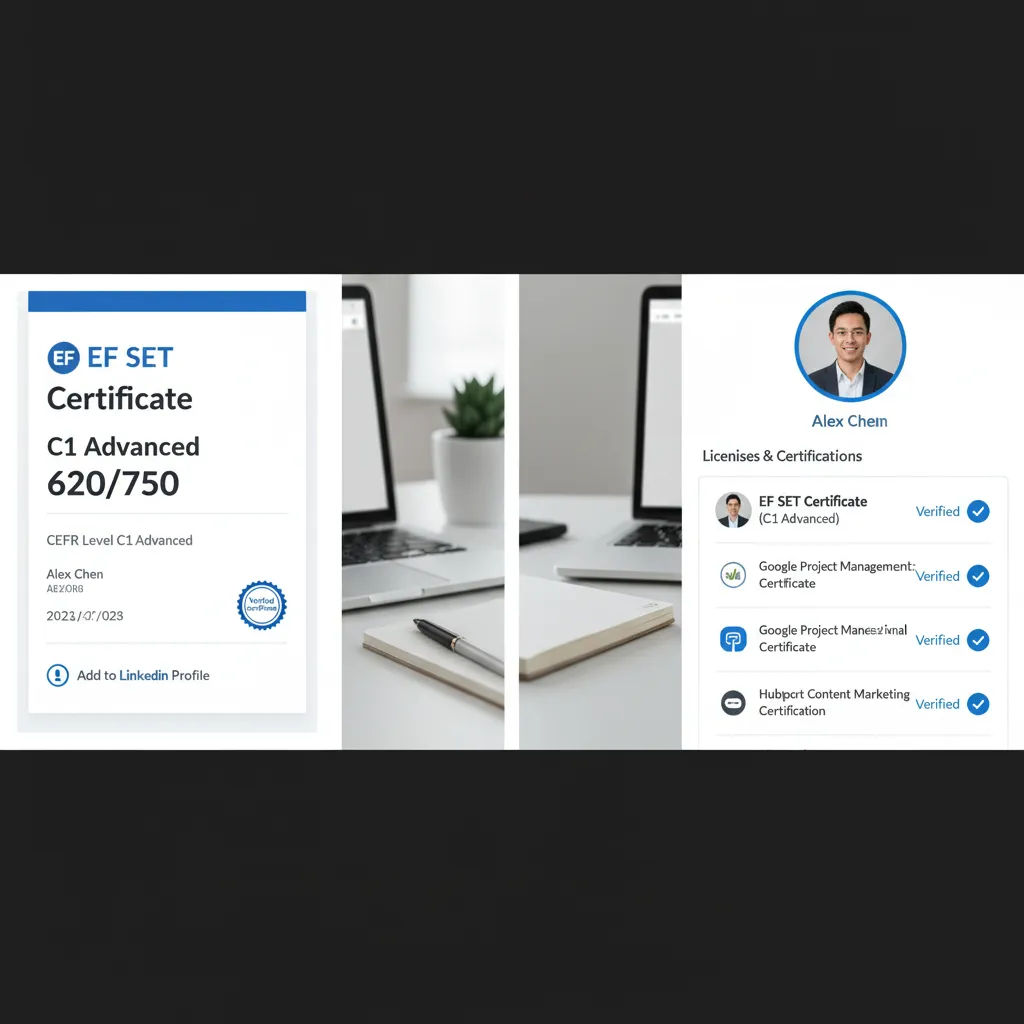
- Output: A unique URL and PDF certificate highlighting your CEFR level (A1 to C2).
I have verified this personally on LinkedIn. When you add the EF SET to your profile, it doesn’t just look like a generic entry; it links directly to your verified score page. This allows recruiters to validate your claim instantly.
University-Backed Options: Financial Aid & OpenCourseWare
This is where things get interesting—and where most other guides are outdated. In the past, you could easily get university-branded certificates from platforms like Coursera and edX for free. In 2025, the rules have tightened.
The Coursera Financial Aid “Loophole” (2025 Update)
For years, “Financial Aid” on Coursera meant 100% free. However, recent policy changes have shifted the landscape. It is crucial you understand this before applying.
According to Coursera Support’s 2024 policy update, accepted financial aid applications in many regions now require a mandatory 10% co-pay. If a course costs $49, you might have to pay ~$4.90. While not technically “free,” getting a certificate from the University of Pennsylvania or Imperial College London for the price of a coffee is the closest you will get to a premium credential for free.
How to do it:
1. Find a language course (e.g., “English for Career Development” by UPenn).
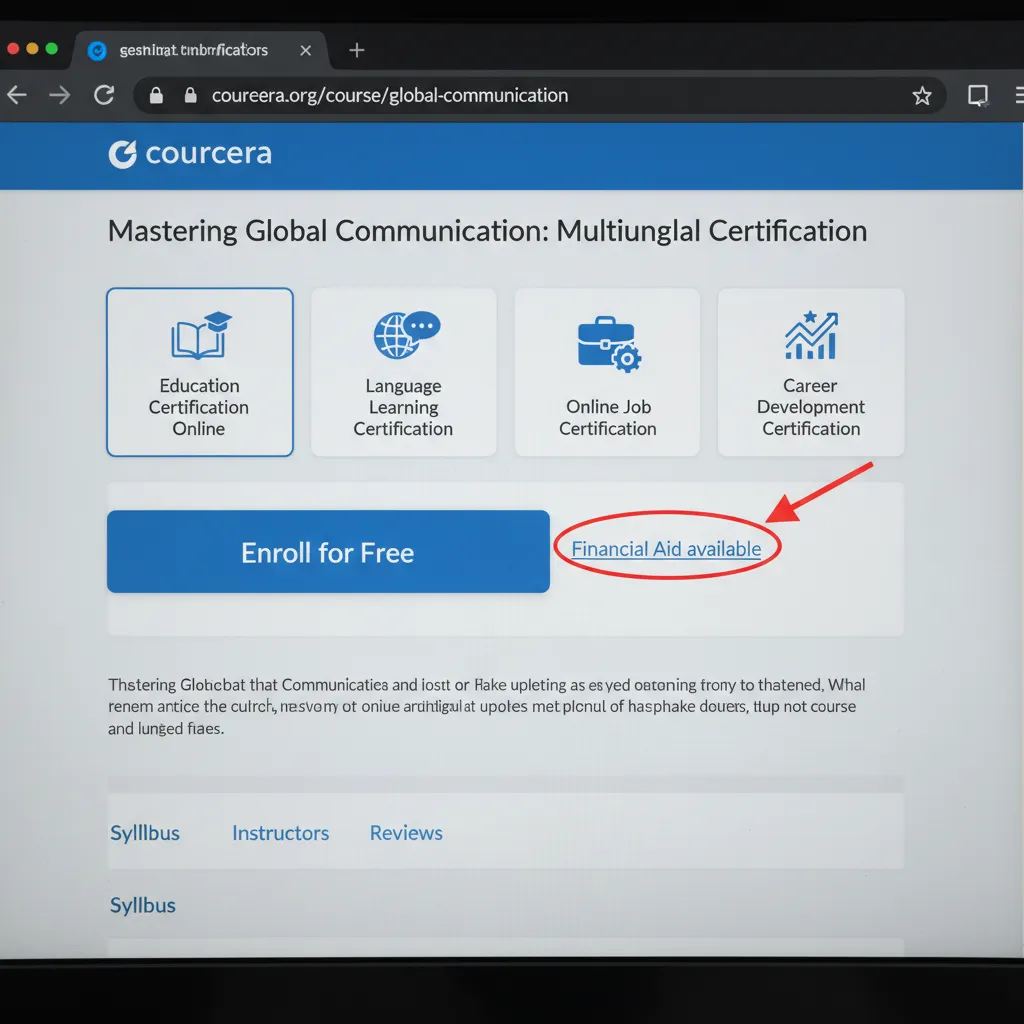
2. Do not click “Enroll for Free” (that triggers the 7-day trial).
3. Look for the small “Financial Aid available” link near the title.
4. Fill out the application. Be honest about your financial situation.
5. Wait 15 days for approval.
The Open University (OpenLearn)
If you absolutely cannot spend a dime, The Open University (UK) remains a beacon of hope. Their platform, OpenLearn, offers high-quality courses with a “Statement of Participation.”
According to The Open University’s 2025 statistics, OpenLearn has issued over 100,000 free statements of participation. These are valid, university-backed documents. However, remember the distinction we made earlier: these are certificates of completion, not proficiency. They show you studied “Intermediate German,” not that you are fluent in it.
Politecnico di Milano (POK)
A hidden gem for European languages is Polimi Open Knowledge. They offer free courses in Italian and other subjects. Upon passing the final quiz, you receive a certificate. Because this comes from a prestigious technical university, it carries significantly more weight than a certificate from a random website.
App-Based Certificates: Are They Worth It?
Let’s address the elephant in the room: Duolingo.
I love the owl as much as anyone for daily practice, but you must be careful about what you put on your CV. A screenshot of your “200-day streak” or a completed tree is not a certificate. It shows dedication, which is a soft skill, but it does not prove language ability.
The Duolingo English Test (DET) vs. The App
There is often confusion here. Duolingo offers a paid, proctored exam called the Duolingo English Test ($59). This is a serious credential. According to Duolingo’s 2025 acceptance list, over 5,000 higher education programs now accept the DET for admissions.
However, the free app certificates? They are gamified rewards. In my experience reviewing resumes, listing “Duolingo Level 5” under “Education” looks unprofessional. Move it to the “Interests” section instead.
“Employers need valid proof that job candidates truly possess the language skills they claim. It is not sufficient to state on a résumé that you are bilingual.”
— Dr. Vinay Patel, Senior I-O Psychologist at AT&T (Source: Language Testing International, 2024)
Government & EU Initiatives (Europass & Erasmus+)
There is a lot of misinformation regarding European Union tools. Let’s clear it up.
Europass is NOT a Certificate
Many users search for “Europass language certificate.” This doesn’t exist. Europass is a portfolio tool. It allows you to create a “Language Passport” where you self-assess your skills based on CEFR standards. It is a fantastic format for presenting your skills, but it is not a third-party validation.
Erasmus+ OLS
If you are a student participating in the Erasmus+ mobility program, you have access to the Online Linguistic Support (OLS). This platform provides language courses and, more importantly, a proficiency assessment. These results are official and highly respected across Europe. If you are eligible, this is arguably the most valuable free certificate available.
How to List Free Certificates on Your Resume & LinkedIn
Having the certificate is step one. Presenting it correctly is step two. If you place a free certificate in the wrong section, it can look like you are padding your resume.
The “Education” vs. “Skills” Dilemma
- Tier 1 (Valid Proficiency): EF SET, OLS.
Where to put it: “Certifications” or “Languages” section. Include your score (e.g., “EF SET English Certificate – C2 Proficient”). Link the URL. - Tier 2 (University Completion): Coursera (Financial Aid), OpenLearn.
Where to put it: “Courses” or “Professional Development.” Do not list this under “Education” unless it was a credit-bearing university course. - Tier 3 (App Badges): Duolingo, Busuu free tier.
Where to put it: “Interests” or “Hobbies.” Frame it as “Self-directed language study.”

The LinkedIn Strategy
LinkedIn allows you to add a “Credential URL” in the Licenses & Certifications section. Always use this. A clickable link is the digital equivalent of a notarized document. It proves the cert wasn’t Photoshopped.
According to the Global Seal of Biliteracy (Jan 2025), bilingual employees can earn up to 20% more per hour than their monolingual peers. The ROI on getting certified—even for free—is massive.
FAQ: Validating Your Free Language Skills
Is the EF SET certificate recognized by universities?
Generally, no. While the EF SET is excellent for employment verification (LinkedIn/CV), most universities require secure, proctored exams like TOEFL, IELTS, or the paid Duolingo English Test for admission purposes.
Does Coursera still give 100% financial aid in 2025?
Not always. As mentioned earlier, Coursera’s updated policy often requires a small co-pay (around 10%) in developed nations. However, full waivers may still be granted depending on your specific economic region and the partner university’s policy.
Can I use a free certificate for a visa application?
No. Immigration authorities (like USCIS or UKVI) have strict lists of approved secure English language tests (SELT). Free online tests do not meet the security protocols required for visa processing.
Are Alison language certificates accredited?
Alison certificates are CPD accredited, which means they are recognized for “Continuing Professional Development.” They are legitimate for showing you completed a course, but they are not the same as a standardized proficiency exam like the CEFR-aligned tests.
Conclusion: The “Hybrid Strategy” for 2025
So, can you get a language certificate for free? Yes. Can you get a powerful one for free? Only if you choose wisely.
The “free” landscape in 2025 has shifted. The days of getting Ivy League credentials completely gratis are fading, replaced by low-cost co-pays and stricter distinctions between “participation” and “proficiency.”
My advice for your career strategy is to use a Hybrid Approach:
- Use Free Certs for the Filter: Take the EF SET (for English) or university MOOCs (for other languages) to populate your LinkedIn and get past the initial resume screening algorithms.
- Save Money for the Closer: If a specific employer or government agency demands an IELTS or DELF score, pay for it then. Don’t spend the money until you have a reason to.
Language learning is a journey, but proving it is a transaction. By using recognized tools like EF SET and navigating financial aid correctly, you can build a portfolio that validates your skills without emptying your wallet.