
Best Online Teacher Certification Programs (2025): Fast-Track Your Credential
The numbers are staggering. As we head into the 2025 school year, the Learning Policy Institute reports that 45 states are facing shortages in special education, and 41 states are desperate for science teachers. This isn’t just a statistic—it’s a crisis that has created an unprecedented opportunity for career switchers.
If you have ever considered leading a classroom, the barriers to entry have never been lower, but the stakes have never been higher. Schools are desperate for qualified educators, and thanks to modern alternative teacher certification pathways, you can now get certified in as little as 9 months without stepping foot on a campus until your internship.
However, the internet is flooded with “courses” that offer nothing more than a PDF certificate. You don’t need a certificate of completion; you need a state license that leads to a paycheck.
In this guide, we are pivoting away from generic advice. We are decoding the “State Reciprocity” maze (NASDTEC) and ranking programs by ROI (Return on Investment)—not just prestige. We’ll explore how to get hired on a provisional license while you study, and how to avoid the “diploma mills” that drain your wallet.

🚨 2025 Market Reality Check
According to Devlin Peck’s analysis of BLS/JOLTS data, there are currently only 0.55 hires for every 1 teacher job opening. This vacancy gap means districts are offering hiring bonuses, paid residencies, and fast-track approvals like never before.
The “Golden Rule”: Understanding Accreditation (CAEP & AAQEP)
Before you look at a single syllabus, you must understand the regulatory landscape. In my years of analyzing educational pathways, the biggest mistake I see aspiring teachers make is enrolling in a program that lacks regional accreditation or specific programmatic accreditation.
If a program is not accredited by the Council for the Accreditation of Educator Preparation (CAEP) or the Association for Advancing Quality in Educator Preparation (AAQEP), your certificate might be useless outside of the specific state—or even the specific district—where you earned it.
Why does this matter? Because of the “State Swap.” If you get certified in Texas but move to Colorado, Colorado’s Department of Education will immediately check if your Texas program was accredited. If it wasn’t, you start over. Zero credit.
Many websites list “Praxis II Prep Courses” alongside “Certification Programs.” A prep course helps you pass an exam; it does not grant you a license. Ensure the program is a DOE approved program (Department of Education) authorized to recommend you for licensure.
Top Online Teacher Certification Programs Ranked (2024-2025)
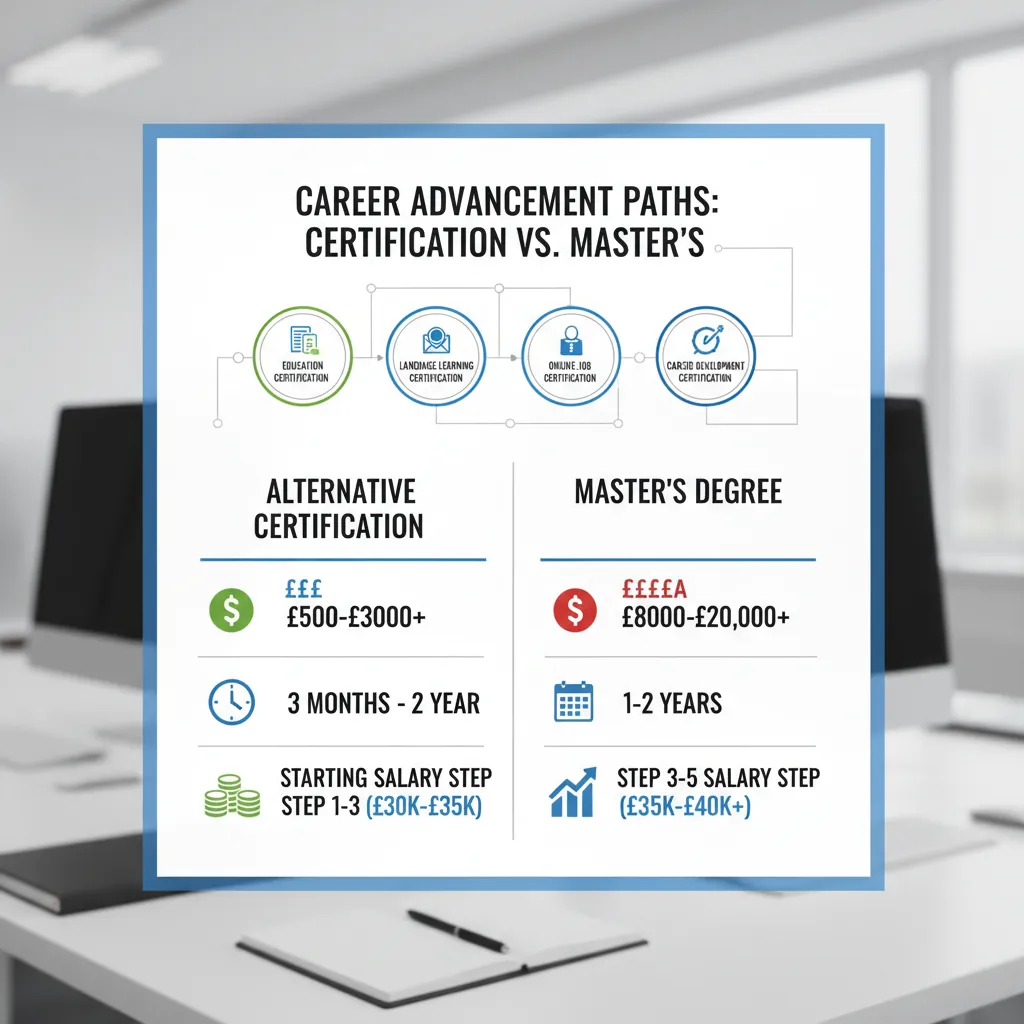
We have categorized these programs not by “prestige,” but by intent: Do you want a Master’s degree for long-term salary growth, or do you want the fastest route to a paycheck?
Category 1: The “Fast-Track” Alternative Routes (Best for Career Switchers)
These programs are designed for people who already hold a Bachelor’s degree in a non-education field (like Accounting or Biology) and want to switch careers efficiently.
1. iTeach (Various States)
iTeach has revolutionized the entry model. They operate on a deferred payment structure. You pay a small enrollment fee, but the bulk of the tuition is deducted from your paycheck only after you get hired as a teacher.
- Cost: ~$4,500 (mostly deferred).
- Speed: 3-6 months of coursework before internship.
- Verdict: Best for risk management. If you don’t get a job, you don’t pay the full tuition.
2. Teachers of Tomorrow
As one of the largest alternative certification providers in the country, they have massive infrastructure. Their “Texas Teachers” arm is particularly famous, but they operate in several states. They specialize in emergency teaching certification and helping you secure a “Probationary Certificate” so you can teach (and get paid) while finishing your exams.
Category 2: The “All-Inclusive” Degrees (Best for Long-Term Earnings)
1. Western Governors University (WGU) – Teachers College
WGU is the disruptor in this space. They offer an Online MAT (Master of Arts in Teaching) using a competency-based model. This means you don’t wait for a semester to end; you move as fast as you can master the material.
- Cost: Flat rate of ~$4,000 per 6-month term.
- Speed: varied (12-18 months average).
- Verdict: The highest ROI for a Master’s degree. You enter the workforce at a higher salary step (“Master’s +0”) for a fraction of the cost of a traditional university.
2. USC Rossier School of Education (Online MAT)
If you want the prestige of a top-tier research university and the alumni network that comes with it, USC is the gold standard. While expensive, their placement rate and support for the EdTPA assessment are world-class.
Core Coursework: What You Will Actually Study
You might be searching for “online courses for teaching credentials,” but what does that actually look like inside a Learning Management System (LMS)? Modern pedagogy isn’t just reading textbooks.
- Classroom Management & Behavioral Intervention: This is usually the hardest part for new teachers. You’ll study tiered intervention systems (PBIS) to manage disruptive behavior without losing your cool.
- Pedagogy & Instructional Strategy: How to scaffold a lesson so that a student who reads at a 3rd-grade level can understand 5th-grade science.
- Special Education & Inclusion: With the Learning Policy Institute noting that 45 states have shortages here, many programs now mandate “SpEd” inclusion coursework for all general education teachers.
- The Student Teaching Experience: Even online programs require this. You cannot become a teacher without a clinical residency. However, online programs allow you to do this in your local district, often arranging a “paid internship” where you are the teacher of record rather than an unpaid student observer.
The “State Swap”: Navigating Reciprocity (NASDTEC)
This is the most confusing part of teacher licensure, and it’s where most articles fail you. Does a license in Arizona work in New York?
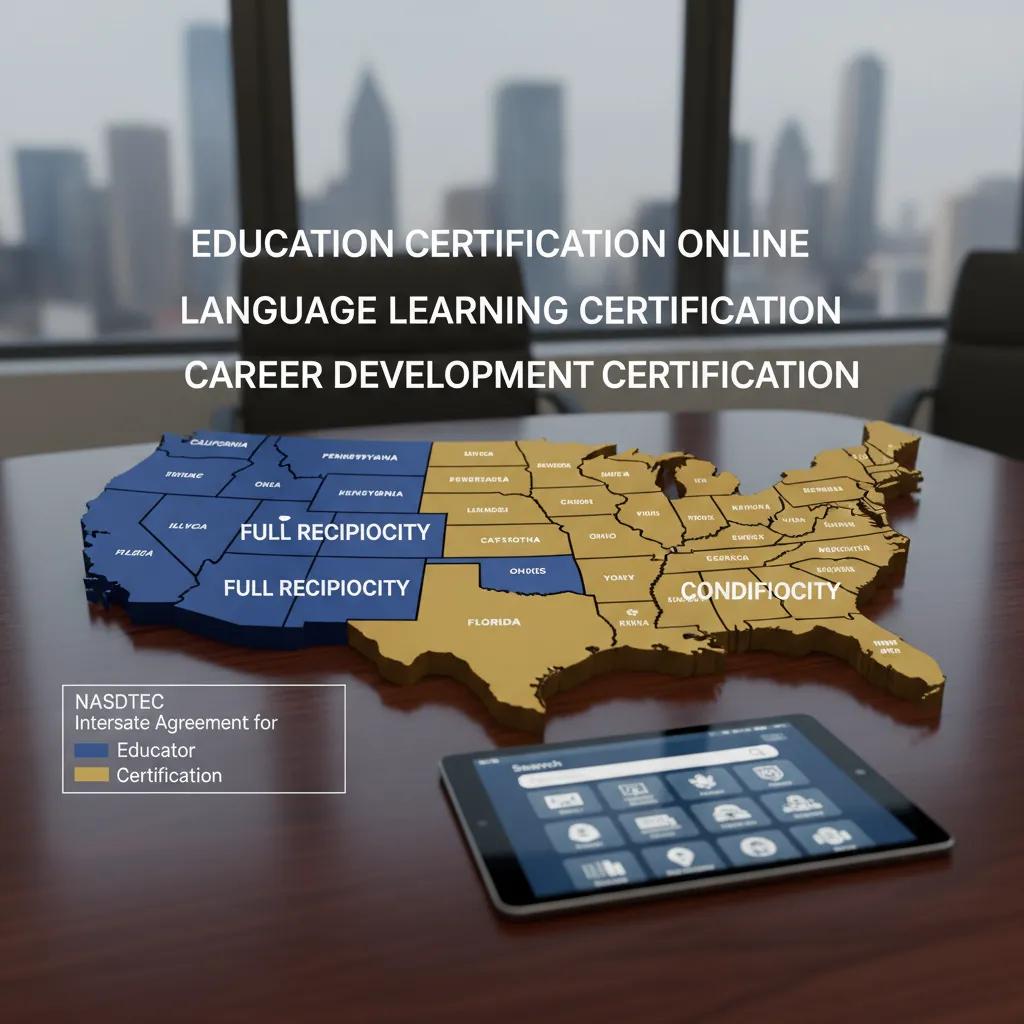
The answer lies in the NASDTEC Interstate Agreement. This is a collection of over 50 individual agreements between states. According to the NASDTEC 2024 Update, the agreement facilitates mobility, but it is rarely automatic.
Full Reciprocity vs. Conditional Reciprocity
Most states operate on “Conditional Reciprocity.” This means they will recognize your out-of-state license, BUT you must complete specific deficiencies within one year. Common deficiencies include:
- State-Specific History: (e.g., Texas History courses).
- Testing: Passing that state’s specific exams (like the MEGA in Missouri or the FTCE in Florida).
- Reading Instruction: Many states now require specific “Science of Reading” coursework that older programs didn’t cover.
Cost Analysis: Alternative vs. Master’s Degrees
Let’s talk money. We need to calculate the “Break-Even Point.”
According to Research.com’s October 2024 data, alternative certification programs typically range from $4,350 to $6,180. In contrast, traditional four-year education degrees or Master’s programs can reach upwards of $80,000.
The ROI Calculation
Imagine two teachers, Sarah and Mike.
- Sarah (Alternative Route): Pays $4,500. Starts working in Month 4 on a provisional license earning $46,000/year.
- Mike (Traditional Master’s): Pays $30,000. Studies for 2 years (negative income). Starts working in Year 3 earning $50,000/year (Master’s bump).
It will take Mike nearly 10 years to catch up to Sarah’s total net worth because of the two years of lost wages and the higher tuition debt. Unless you aim for administration (Principal/Superintendent), the fastest route is often the most financially sound.
2025 Career Outlook & Salary Expectations
The narrative that “teachers are underpaid” is true, but the needle is moving. Becky Pringle, President of the NEA, noted regarding the 2024 Teacher Salary Benchmark Report that starting salaries increased by 3.9%, the largest increase in 15 years.
The NEA report confirms the national average starting teacher salary hit $46,526 for the 2023-2024 school year. In high-demand districts, especially for STEM or Special Education, signing bonuses of $2,000 to $5,000 are becoming standard.
Furthermore, the Bureau of Labor Statistics projects approximately 109,000 openings annually for kindergarten and elementary teachers through 2033. This is a job market with incredibly high security.

FAQ: Your Certification Questions Answered
Can I get a teaching certificate while working full time?
Yes. Self-paced online teacher certification programs like iTeach or WGU are designed exactly for this. You complete the coursework on nights and weekends. However, you will eventually need to take time off for your student teaching internship, though some alternative programs allow you to do this as a paid employee of the school.
What is the difference between a certificate and a license?
A “certificate” (like a TEFL certificate) is often just a piece of paper saying you took a class. A “license” (or credential) is a legal document issued by a state government (DOE) allowing you to teach in public schools. Always aim for the license.
Do online teaching programs require student teaching?
Yes, absolutely. No accredited program can skip this. However, alternative certification programs utilize an “Internship” model where you are hired as a teacher on a probationary certificate, run your own classroom, and get paid a full salary while being supervised by the program.
Is online teacher certification valid in all states?
Technically, no single certificate is valid in “all” states immediately. However, through the NASDTEC agreement, most states will accept a valid license from another state as the basis for issuing their own license, provided you meet their specific testing requirements.
Conclusion: Your Action Plan
The teacher shortage is a crisis for schools, but an opportunity for you to find a stable, rewarding career with a clear path to entry. The days of needing a four-year Education degree to enter the classroom are gone.
To fast-track your credential, follow this checklist:
- Verify Accreditation: Ensure your chosen program is CAEP or AAQEP accredited.
- Check State Reciprocity: If you plan to move, check the NASDTEC agreements for your target state.
- Choose Your Lane: If you need money now, choose an Alternative Certification program (iTeach/Teachers of Tomorrow). If you want long-term salary steps, choose a competency-based Master’s (WGU).
- Secure the “Intern” Credential: Aim for programs that allow you to earn a probationary certificate so you can get paid during your training.