

Best Leadership Training Programs for Professionals 2025: The Definitive Guide to ROI & Skills
In 2025, technical skills get you hired, but human-centric leadership gets you promoted. It’s a harsh reality I’ve seen play out in boardrooms across three continents: brilliant engineers or top-tier sales reps who are suddenly promoted to management, only to drown in the “frozen middle” because they were never taught how to lead.
We are facing a crisis. According to Gallup’s State of the Global Workplace 2024, managers account for a staggering 70% of the variance in team employee engagement. When you realize that disengaged employees cost the global economy $8.9 trillion in lost productivity, the price of “figuring it out as you go” is no longer affordable.
You might be wondering: “Is leadership training actually worth the time away from my desk?” Or perhaps you’re an HR director trying to justify a budget line item. This isn’t just another list of generic courses. This is a strategic guide to high quality leadership training for professionals, analyzing the top data-backed methodologies and providing a roadmap to calculate measurable ROI.

The “Leadership Void”: Why Training is Critical Now
Let’s be honest for a second. Most organizations promote people based on their past performance as individual contributors, not their future potential as leaders. This creates what I call the “Leadership Void.”
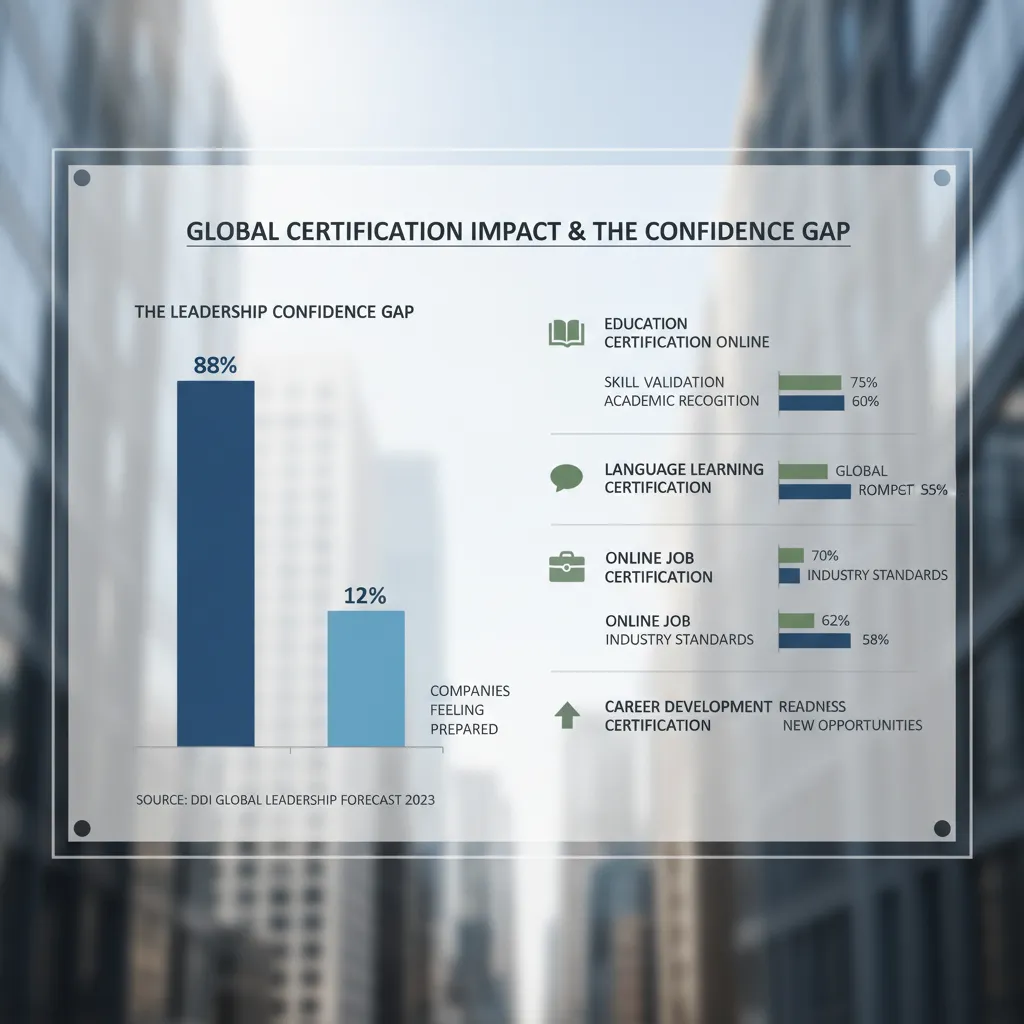
The statistics are alarming. A recent report from DDI’s Global Leadership Forecast reveals that only 12% of companies express confidence in their leadership bench strength. That means 88% of organizations are effectively flying blind, hoping their current managers don’t burn out or quit.
And burnout is the operative word here. Gallup (2024) reports that 41% of employees experience “a lot of stress,” and those in companies with bad management practices are nearly 60% more likely to be stressed. I’ve seen this firsthand—when a leader is stressed, the team absorbs that anxiety like a sponge.
Core Competencies of High-Quality Leadership Programs in 2025
If you’re looking for training, ignore the fluff. In my experience, the “rah-rah” motivational seminars wear off in about 48 hours. To truly move the needle, modern leadership curriculums must focus on specific, hard-to-master behaviors.
1. Adaptive Leadership in the Age of AI
We can’t talk about 2025 without mentioning Artificial Intelligence. But here’s the twist: leadership training shouldn’t just be about how to use AI tools. It should be about leading humans in an AI workforce.
“As AI accelerates the pace of change, people who can learn and adapt will be the most valuable asset to any organization.”
— Ryan Roslansky, CEO of LinkedIn (LinkedIn Workplace Learning Report 2024)
High-quality programs now teach cognitive flexibility training—the ability to shift thinking strategies when rules change. This is the difference between a manager who fights automation and a leader who leverages it to free up their team for creative work.
2. Emotional Intelligence (EQ) & Psychological Safety
I used to think “vulnerability” was a buzzword until I saw the data. Research by DDI shows that leaders who consistently show vulnerability are 5.3 times more likely to build trust with their employees. Trust is the currency of speed in business. Without it, everything slows down.
Effective training must include modules on:
- Psychological safety in the workplace: Creating environments where mistakes are learning opportunities, not career-enders.
- Conflict resolution workshops: Moving beyond “agreeing to disagree” toward collaborative problem solving.
- Inclusive leadership training: Ensuring every voice is heard, which is critical for innovation.
3. Strategic Decision Making & Crisis Management
According to Harvard Business Publishing (2024), 70% of L&D professionals say it is important for leaders to master a wider range of effective behaviors. This includes strategic decision-making skills under pressure. We live in a VUCA world (Volatile, Uncertain, Complex, Ambiguous), and the “wait and see” approach is a death knell.

Evaluating Training Formats: Online vs. Hybrid vs. Workshops
One question I get asked constantly is: “Is online training actually effective for soft skills?” Ten years ago, I would have said no. Today, thanks to cohort-based learning and VR simulations, the landscape has shifted.
According to Fortune Business Insights (2024), the global online corporate leadership training market is projected to grow at a CAGR of 9.85% through 2032. The market is voting with its wallet.
| Format | Best Use Case | Pros | Cons |
|---|---|---|---|
| Cohort-Based Online | Upskilling for first-time managers | Scalable, cost-effective, peer networking | Requires high self-discipline |
| In-Person Workshops | Executive presence coaching & Conflict resolution | High engagement, deep emotional impact | Expensive, logistical challenges |
| Hybrid / Blended | Corporate leadership pipeline programs | Best of both worlds, continuous reinforcement | Complex to administer |
How to Measure Leadership Training ROI (The Missing Link)
This is where most articles stop, but this is where the real value lies. How do you prove that the $5,000 you spent on a course actually helped the company? If you can’t measure it, you can’t manage it.
A fascinating case study comes from Collectors (the collectibles parent company). As reported in Forbes (2024), VP of Talent Dr. Eliza Wicher implemented data-driven training focused on tracking “performance conversations.” By measuring this single baseline behavior, they could correlate training directly to engagement scores.
The ROI Formula
To calculate the Return on Investment for leadership development, use this classic formula:
💰 Leadership Training ROI Calculator
Estimate the potential return on your training investment.
Note: Productivity gains can be estimated through reduced turnover costs (usually 1.5x – 2x annual salary per replaced employee) or increased output per team member.
Top Rated Leadership Training Providers for 2025
Based on curriculum depth, faculty expertise, and verifiable learner outcomes, these are the standout providers for high-quality leadership training for professionals this year.
1. Center for Creative Leadership (CCL)
Best For: Transformational leadership development.
CCL is widely regarded as the gold standard for immersion. Their focus isn’t just on skills; it’s on identity shift. They rely heavily on 360-degree assessments, which aligns with Gallup’s findings on the need for self-awareness in management.
2. Harvard Business School Online
Best For: Strategic decision-making and business acumen.
If you need credibility and academic rigor, HBS Online offers “Leadership Principles” that are surprisingly interactive. It utilizes the case study method, forcing you to step into the shoes of a CEO during a crisis.
3. LinkedIn Learning
Best For: New managers and “in-the-flow” learning.
According to the 2024 Workplace Learning Report, “helping employees develop their careers” climbed to the #4 priority for L&D. LinkedIn’s bite-sized courses on soft skills for remote teams and emotional intelligence for managers are perfect for the busy professional who can’t take a week off.

Real-World Implementation: The 30-60-90 Day Plan
The biggest mistake I see professionals make is treating training like a car wash—you go in dirty, come out clean, and you’re done. Leadership is a practice, not an event.
Here is a proven framework to ensure your training sticks:
- Day 0-30 (The Sponge Phase): Focus on situational leadership models. specific to your team. Conduct “listening tours” with your direct reports. Ask them: “What obstacles can I remove for you?”
- Day 31-60 (The Experiment Phase): Pick one skill, such as conflict resolution strategies, and apply it consciously. Keep a journal. When you tried to be “coach-like” instead of directive, what happened?
- Day 61-90 (The Integration Phase): Teach what you learned. As the Roman philosopher Seneca said, “While we teach, we learn.” Host a brown-bag lunch on organizational change management or whatever topic you mastered.
Conclusion: The Cost of Inaction
The landscape of work is shifting beneath our feet. Training Magazine (2024) notes that U.S. training expenditures have passed the $100 billion mark, proving that smart companies are doubling down on development.
Investing in high quality leadership training for professionals isn’t just about padding a resume or getting a certificate. It’s about survival. It’s about ensuring that when the next crisis hits—or the next AI disruption lands—you have the emotional intelligence, the strategic foresight, and the trust of your team to navigate it.
Don’t wait for the title to start acting like a leader. Identify your gap, choose a program with proven ROI, and start leading from where you are today.
Frequently Asked Questions (FAQ)
What makes a leadership training program effective?
Effectiveness hinges on application. The best programs combine theory with active role-playing, peer feedback, and a structured follow-up mechanism to ensure behavioral change, commonly referred to as “learning transfer.”
How much does executive leadership coaching cost in 2025?
Costs vary wildly. Online cohort courses typically range from $1,000 to $3,000. Comprehensive university certificates can range from $5,000 to $15,000. One-on-one executive coaching often costs $500+ per hour.
Is online leadership training as good as in-person?
For knowledge acquisition, yes. For deep behavioral change (like executive presence coaching), in-person or hybrid models often yield better results due to the immersive nature of human interaction.
What are the top leadership skills for 2025?
Based on World Economic Forum data, the top skills are Resilience, Flexibility, Agility, Motivation and Self-Awareness, and Curiosity/Lifelong Learning.