

Best Education Certification Online for Tutors (2025 Ranked Guide)
In the booming online education market, there is a distinct line drawn in the sand. On one side, you have the “gig economy” tutors fighting for $15 an hour on massive aggregation platforms. On the other side, you have professional, independent educators commanding $60 to $130 per hour. The difference often isn’t just skill—it’s proven authority.
If you are looking to cross that line, you might be overwhelmed by the options. I’ve seen countless talented educators waste money on generic “certificates of completion” that hold zero weight with high-paying clients or school districts. With the global online tutoring market projected to reach $12.8 billion in 2025, according to The Business Research Company, the competition is fierce. Parents and institutions are no longer just looking for “help”—they are looking for certified interventionists.
This isn’t just about hanging a piece of paper on your wall. It’s about future-proofing your income against AI and distinguishing yourself as a premium service provider. In this definitive guide, we analyze the top accredited certifications—including the National Tutoring Association (NTA) and CRLA—breaking down hidden costs, validity, and the real ROI you can expect in 2025.
Why Certification Matters in 2025 (Data-Backed ROI)
You might be asking, “Do I really need a certificate to teach math or English?” Technically, no. But if you want to turn tutoring into a sustainable business rather than a side hustle, the data suggests otherwise.
The Salary Gap: Certified vs. Non-Certified
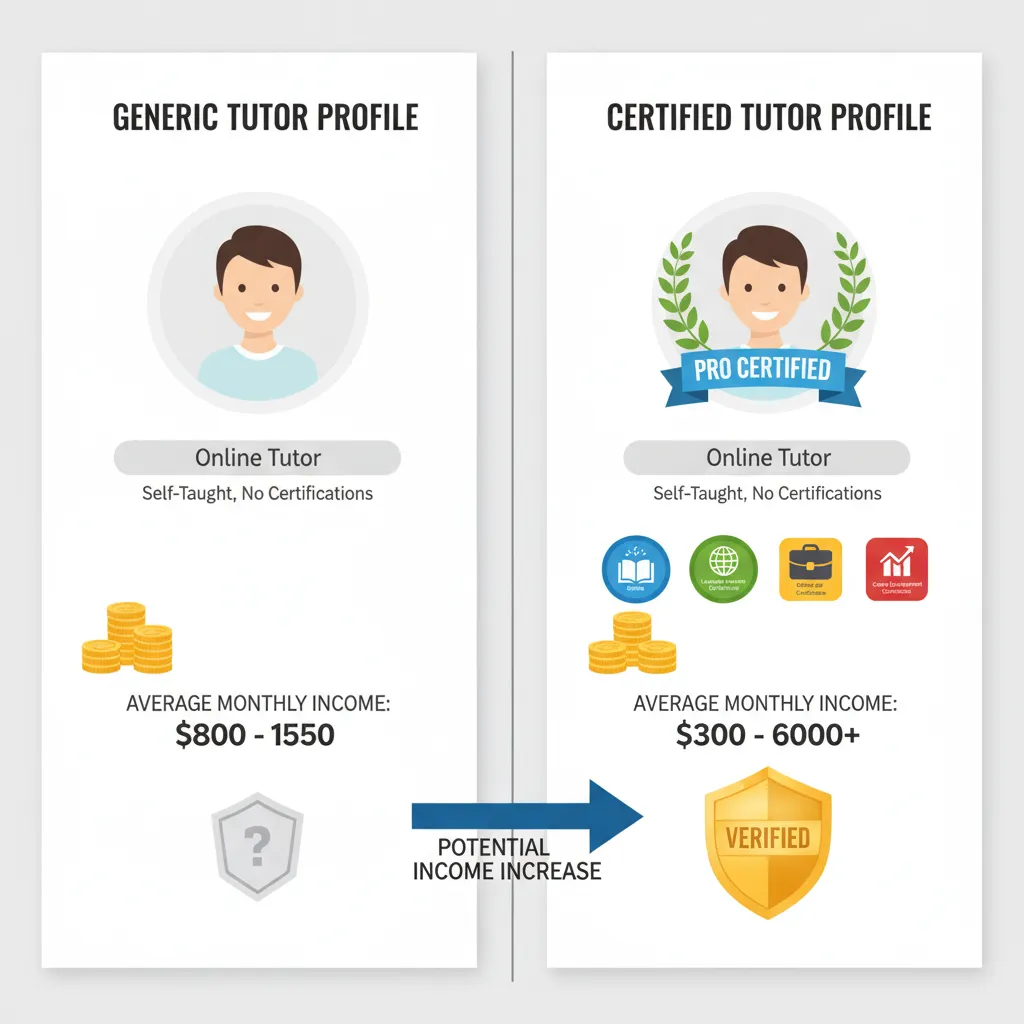
The financial return on certification is immediate and measurable. According to December 2025 data from ZipRecruiter, the average salary for a Certified Tutor in the US has climbed to $55,796, with top earners in the 90th percentile making significantly more. Compare this to non-certified, entry-level positions often capped at $30,000 annually, and the investment becomes a no-brainer.
The average annual earning difference between certified professionals and non-certified peers.
The Rise of “High-Dosage” Tutoring
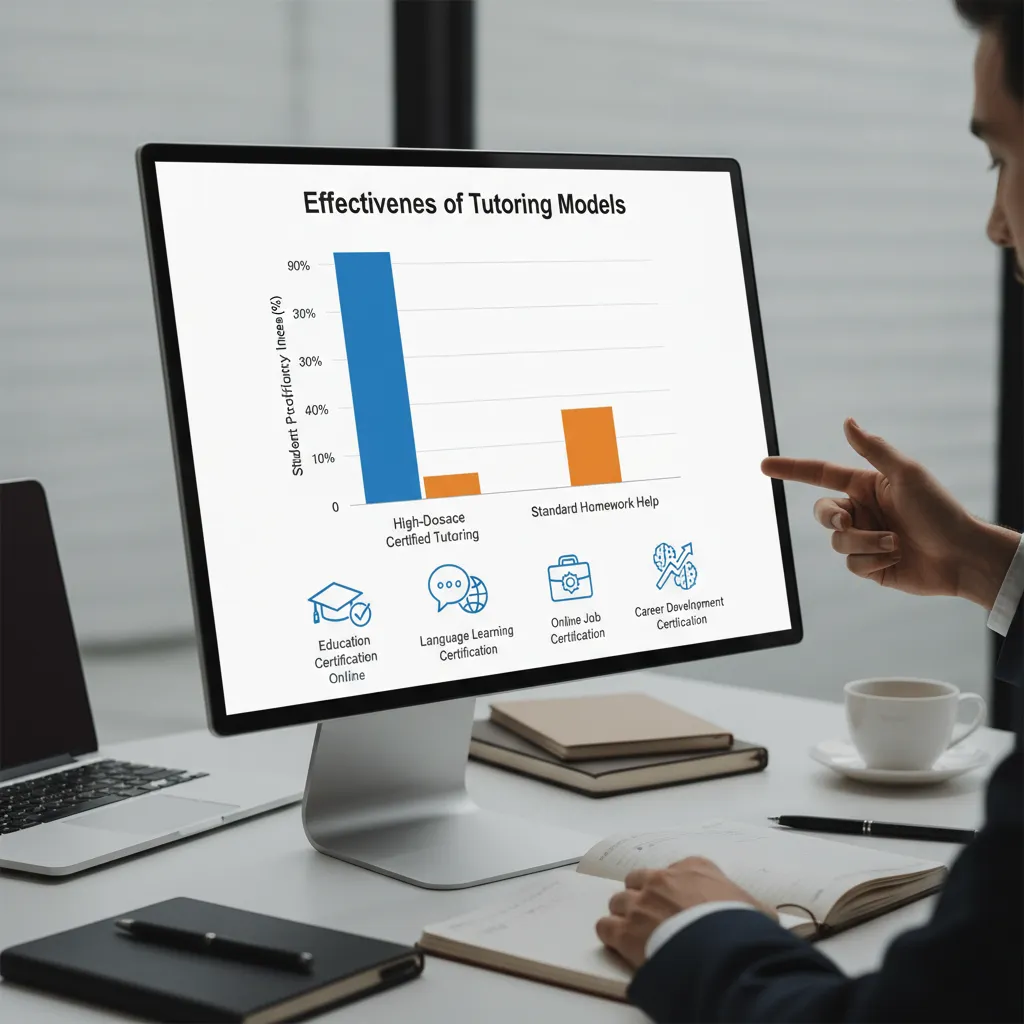
The market has shifted. Schools and parents are now prioritizing “high-dosage tutoring”—a specific model involving small groups meeting three or more times a week. This isn’t homework help; it’s educational therapy.
According to the National Education Association (NEA), high-dosage tutoring is up to 20 times more effective for math learning than standard models. Because this method is so powerful, school districts are using federal funds to hire tutors, but they almost exclusively hire those with recognized credentials.
A 2024 study by the University of Chicago Education Lab found that in-school tutoring resulted in two-thirds of a year of additional math learning. This is the level of impact clients pay for, and they need assurance you can deliver it.
Tier 1: The Gold Standard – National Tutoring Association (NTA)
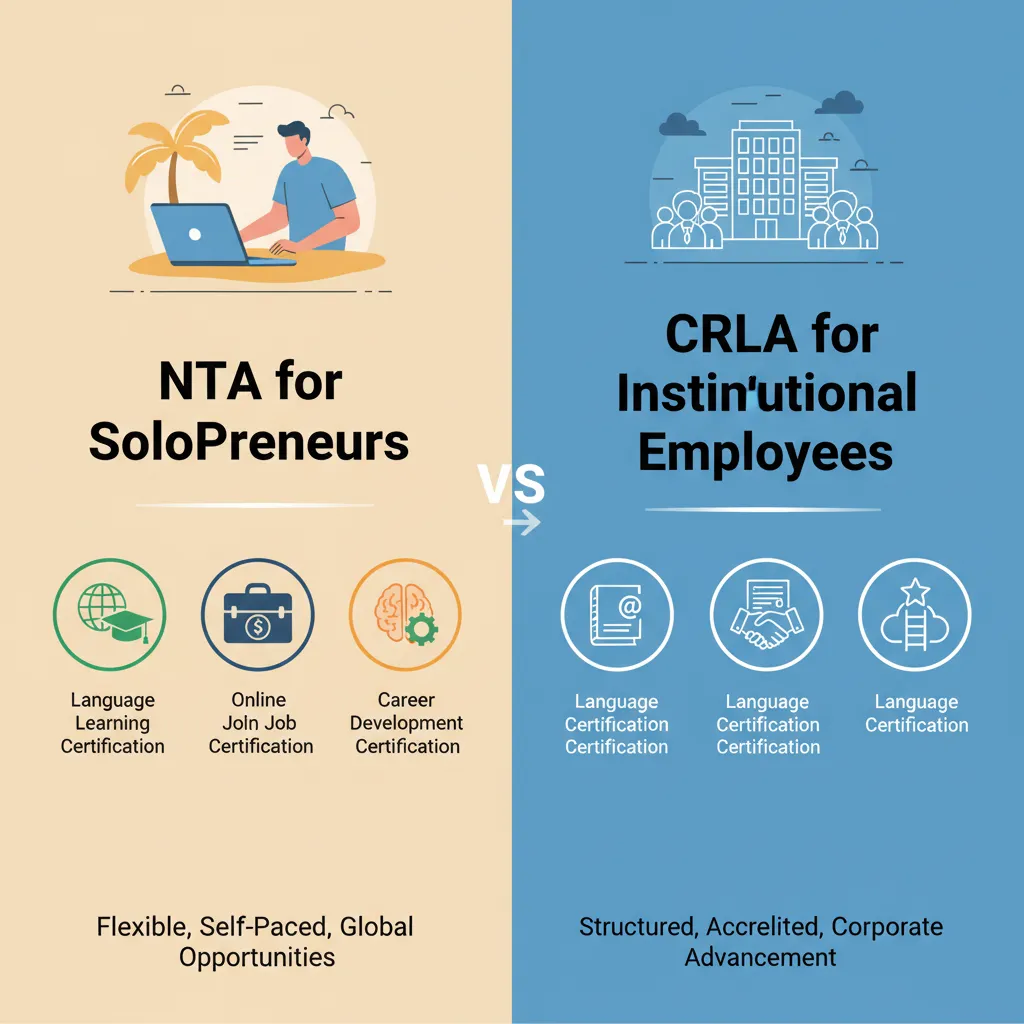
If you are an independent tutor looking to start a private practice or legitimize your freelance business, the National Tutoring Association (NTA) is your primary target. Established in 1992, it is the oldest and most respected professional association dedicated solely to tutoring.
Why It Ranks #1
Unlike academic certificates that require you to be employed by a university, the NTA certification travels with you. It validates your individual competency. In my experience, displaying the NTA digital badge on a LinkedIn profile or personal website instantly separates you from the casual “homework helpers.”
Certification Levels
The NTA offers a tiered progression system:
- Basic Level: Focuses on fundamental pedagogy and ethics.
- Intermediate Level: Dives deeper into learning styles and cognitive processing.
- Advanced Level: For career tutors managing complex learning cases.
- Master Tutor: The highest designation, often requiring publication or significant contribution to the field.
2025 Costs & Requirements (The Hidden Details)
Many guides glaze over the pricing, but you need to know the full investment. According to the National Tutoring Association, here is what you should budget for:
- Membership Fee: You must be a member to be certified. (Approx. $50/year).
- Application Fee: ~$25 processing fee.
- Training Webinars: This is where the real cost lies. Each level requires specific training modules, typically costing around $70 to $150 depending on the package.
- Experience: You generally need documented tutoring hours (often 10-30 hours) before you can apply for the basic credential.
Pro Tip: Do not view the NTA webinars as passive entertainment. They are rigorous. You will learn about “Active Listening” and “Andragogy” (adult learning), concepts that allow you to justify higher hourly rates to clients.
Tier 2: The Academic Standard – CRLA (College Reading & Learning Association)
If the NTA is for the entrepreneur, the CRLA is for the institutional academic. You will often see “CRLA Certified” listed on university learning center websites. However, there is a massive catch that most people misunderstand.
Understanding ITTPC
The CRLA manages the International Tutor Training Program Certification (ITTPC). Crucially, you cannot buy this certification as an individual. The CRLA certifies the program (e.g., The University of Texas Learning Center), and that program then certifies you.
Who Is This For?
This is the best certification if:
- You are currently a college student working at your university’s tutoring center.
- You are an employee of a large private learning center that holds ITTPC status.
If you fall into these categories, get this certification immediately. It is recognized globally by higher education institutions. If you are a solo tutor, stick with the NTA.
Tier 3: Specialized & Coaching Certifications
As the market evolves, general tutoring is fragmenting into specialized niches. Here are the top contenders for specific career paths.
ACTP (Association for the Coaching and Tutoring Profession)
The ACTP blurs the line between tutoring and academic coaching. If your services focus heavily on executive function, time management, and holistic student development rather than just “teaching calculus,” this is a strong alternative. Their certification process is rigorous and focuses heavily on the psychology of mentoring.
American Tutoring Association (ATA)
The ATA offers a specific “Certified Online Tutor” credential. While slightly less recognized than the NTA in offline circles, their focus on remote delivery methods makes them relevant for digital nomads. They emphasize the technical aspects of online instruction, which is vital in 2025.
TESOL/TEFL (For English Tutors)
If your niche is ESL (English as a Second Language), none of the above matters as much as a TESOL or TEFL certificate. For high-paying adult business English roles, a 120-hour accredited certificate is the industry minimum entry requirement.
Tier 4: Skill-Based Courses (Coursera, Udemy, EdX)
I often get asked, “Can’t I just take a Coursera course?” The answer is yes, but with a caveat. Platforms like Coursera offer skill-building, not professional credentialing.
For example, the “Learning to Teach Online” course by UNSW on Coursera is excellent for learning how to be effective. However, putting “Coursera Completion” on your resume does not carry the same weight as “NTA Certified Tutor.”
When to choose these: Use these platforms to upskill yourself (e.g., learning how to use Zoom whiteboards effectively) after you have achieved a primary certification.
Side-by-Side Comparison: How to Choose
Choosing the right path depends entirely on your career goals. Here is a breakdown of the top options.
| Organization | Best For | Estimated Cost | Prerequisites |
|---|---|---|---|
| NTA | Private Tutors & Business Owners | $150 – $300 (Membership + Training) | Verified experience (10+ hours) |
| CRLA | University Employees | Free (Employer pays) | Must be hired by a certified center |
| ACTP | Academic Coaches | $100 – $250 | Focus on holistic mentoring |
| Schoolhouse.world | Volunteers / New Tutors | Free | Video proof of mastery (Khan Academy) |
Step-by-Step: How to Get Certified & Launch
Ready to increase your hourly rate? Here is the practical roadmap to getting certified in the next 30 days.
-
Document Your Experience (The 30-Hour Rule)
Most reputable certifications require proof of practice. If you are just starting, offer volunteer tutoring at a local library or through Schoolhouse.world. Log every minute. You usually need at least 10 to 30 hours of contact time to qualify for Basic NTA certification.
-
Complete the Background Check
This is non-negotiable for working with minors. Associations like the ATA and NTA will require a clean background check. This is actually a massive marketing asset; parents will pay a premium for verified safety.
-
The Webinar & Examination
You will attend live or recorded webinars. Take notes. These exams aren’t always easy. They cover learning disabilities, legal liabilities, and ethics. Passing this proves you are a professional, not just a smart person.
-
Marketing Your Credential
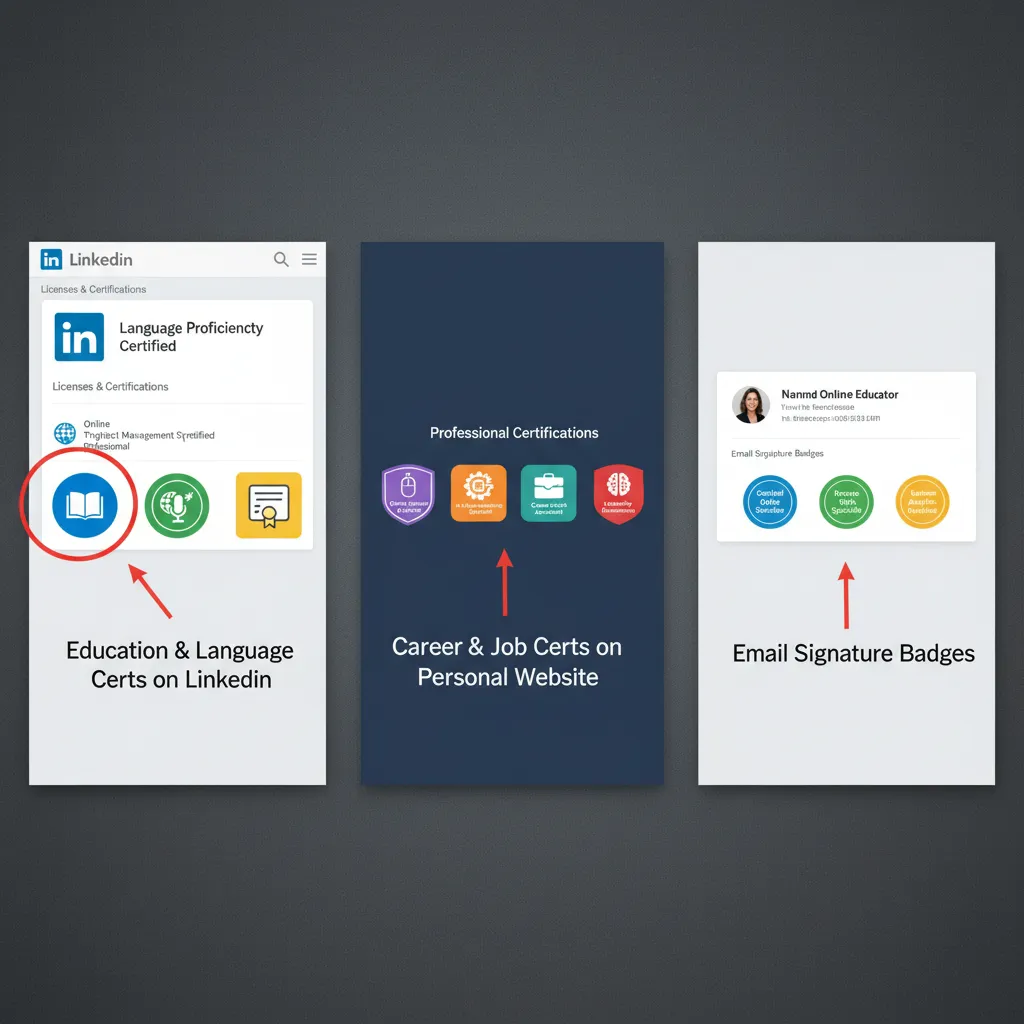
Once you have the digital badge, update your LinkedIn headline to “Certified Professional Tutor.” According to Grand View Research, North America holds 35% of the market share, meaning competition is high. Use your badge in your email signature and on your invoicing to justify your new, higher rates.
Frequently Asked Questions
Do you strictly need a certificate to be an online tutor?
Legally, no. The tutoring industry in the US is largely unregulated. However, commercially, certification is the difference between a hobby and a career. Without it, you are competing on price against college students. With it, you compete on value against other professionals.
Is the National Tutoring Association certification worth the cost?
Yes. If the certification allows you to raise your hourly rate by just $5/hour, and you tutor 10 hours a week, the certification pays for itself in less than a month. The ROI is incredibly high for active tutors.
What is the difference between a certified teacher and a certified tutor?
Great question. A certified teacher is licensed by the state to manage a classroom. A certified tutor is trained by an association (like NTA) to provide one-on-one intervention. Many certified teachers also get tutor certification because the skill sets (classroom management vs. individual coaching) are surprisingly different.
Conclusion: Future-Proofing Your Career
The era of the “homework helper” is fading. With AI tools capable of solving algebra problems in seconds, the value of a human tutor now lies in emotional intelligence, motivation, and complex learning intervention.
Investing in a credential from the National Tutoring Association or the ACTP does more than just look good on a resume. It signals to clients that you possess the pedagogical skills that AI cannot replicate. As we move through 2025, the gap between the $15/hour gig worker and the $60/hour certified professional will only widen.
My advice? Stop competing on price. Get certified, document your results, and position yourself as the premium solution your students deserve.